A dog fits family life when its arousal level, size, and tolerance for handling line up with the ages of the children in the house and with the energy that household actually has on an ordinary weekday. Not the energy of a Saturday. Not the energy anyone wishes they had. That is the whole test, and it has almost nothing to do with which breeds get recommended on the internet.
I learned it standing in a kitchen doorway with a leash in one hand and the other hand flat on the top of a baby gate, watching a rescue dog decide what to do about a four-year-old who had just sprinted past with a juice box.
The tail was going the entire time. That is what fooled me. A wagging tail means a dog is aroused. It does not mean the dog is comfortable. His weight was tipped forward onto his front feet, his ears were pinned back, his mouth was shut, and he was tracking the kid instead of the front door. The foster had told me he loved kids, and I believe he did. He just had no idea what to do with one moving at that speed.
So I stopped evaluating dogs by breed, by size alone, or by how good the photo was, and started evaluating them against a short list of traits matched to what my house actually is.
Start with the ages of the children, then work outward
Everything else follows from this. A dog that suits a household with a ten-year-old is rarely the dog that suits a household with a two-year-old, and no single dog is a good fit for every age your children will pass through.
Under three, kids are fast, loud, and grabby, and they cannot follow a rule no matter how many times you say it. What you need is a dog with high tolerance for sudden handling and noise, or a house with enough gates that the dog is almost never in that situation. Expect to manage constantly, not occasionally.
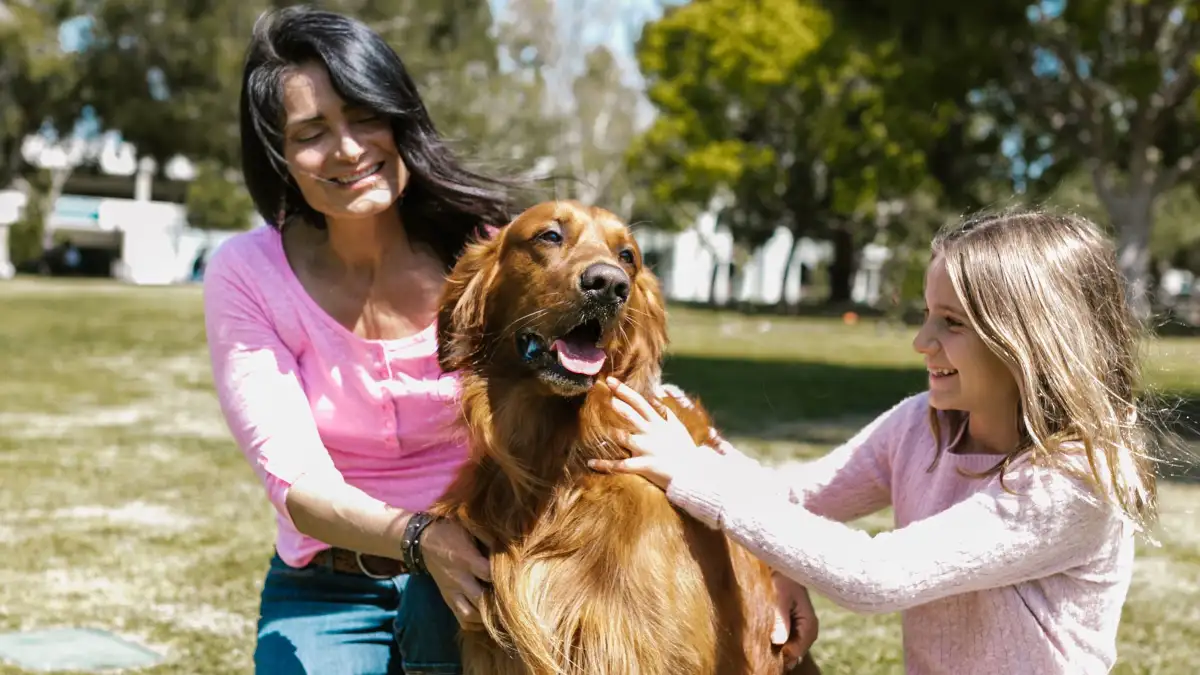
Four to seven is the hugging phase. Kids lean, squeeze, and lie down next to the dog. Look for one that can lean away instead of freezing, and for one that seeks people out rather than merely tolerating them.
Eight to twelve is the phase where a kid can genuinely help. Holding a leash on a quiet street, filling a bowl, five minutes of sits. A dog with more play drive can be a gift here, because now there is a second person in the house with energy to spend.
Teens are their own category. If the thirteen-year-old is going to be the one walking the dog, ask what happens when that thirteen-year-old gets a job and a social life. The dog stays.
Then handle the dog yourself. Not hard, not for long. Touch the paws, lift an ear, run a hand along the collar, and watch the face rather than the tail. A dog that stiffens or turns its head away is telling you something the wagging tail is not.
Arousal is the trait nobody measures
People talk about energy. Energy means how much movement a dog needs in a day. Arousal means how fast the dog goes from settled to over the top, and, more importantly, how long it takes to come back down.
A low-energy dog can be high-arousal. I have met lap dogs that explode at the sound of a dropped pan and need an hour to settle, and I have met large dogs that sleep through a fire truck. Recovery time is the number I pay attention to now. A dog that resets two minutes after the mail carrier is a different animal from one that needs forty minutes and a walk.
In a house with small children, that is the difference between a dog that startles and recovers, and a dog that startles and stays startled until dinner. The second dog is not bad. The second dog is a management job, and you should walk in knowing that.
The Wednesday afternoon test
This is the question that has ended several dogs for me before I ever met them.
It is Wednesday at 2:40 in the afternoon. School lets out at three. Dinner is at six. Who is home, who is walking the dog, and in what chunks of the day does that actually happen?
Total time is not the same as distribution. For a lot of dogs, three twenty-minute outings work better than one sixty-minute walk. For a lot of others, one long sniff-heavy walk beats three brisk loops, because sniffing is work. A dog that spends a walk reading every mailbox comes home more tired than one that trots a mile and sniffs nothing.
Then count the transitions. Arrival, departure, homework, sports gear, five people moving at once. Some dogs sleep through that and some need a quiet room before it starts. Neither is wrong. Only one of them fits a house that gets loud at 5:30.
What a kennel run or a breeder's yard cannot tell you
A dog's behavior in a kennel tells you how that dog behaves in a kennel. That is mostly it.
The dog shut down in the back of a run, staring at the wall, is sometimes overwhelmed rather than calm. The dog bouncing at the front of the gate is sometimes frantic rather than friendly. In a quieter house, either one can turn into a different animal within weeks.
The rough pattern rescue people pass around, a few days to stop being terrified, a few weeks to learn the household rhythm, a few months to show you who they really are, has held up well enough in my experience that I plan around it.
What a kennel cannot show you is what the dog does when a child drops a cracker and dives for it, or when someone reaches under the table during dinner. So ask, specifically, about food, toys, and being moved off furniture. "Great with kids" is not an answer to any of those questions. A good foster or breeder will give you the real answer if you ask plainly.
One meeting in a yard is a weak test. Ask for a walk together, because walking side by side tells you more than standing face to face. If you can, go back a second time.
Space means separation, not square footage
The families I know who struggle with a dog are usually not the ones in small homes. They are the ones in open-plan homes where the dog can see and hear everything from every room and there is nowhere to put a gate.
What you are shopping for is a way to make two zones. A hallway and a pressure-mounted gate. A crate in a bedroom with the door shut. A corner of the kitchen behind a folding barrier. The dog needs a spot it can go to where no child follows, and the child needs a spot where the dog is not underfoot during snack time.
That rest area is not a punishment and not a sign that something went wrong. It is the thing that keeps everyone's stress level down, and in a house with young kids it is not optional. Supervise every interaction between a young child and any dog, every single time, and give the dog somewhere to go when it has had enough.
The money conversation comes first
Roughly in the order it arrives: the adoption or purchase fee, the first vet visit, a crate, a bed, food, parasite prevention, a training class, and either an emergency fund or insurance that you can keep paying after the first year.
The costs that get missed are the ones in year two and beyond. The dog that turned out to need a bigger crate. The fence section that needed fixing. Boarding during the family trip. The training class you take twice because the first one did not stick. Eventually, the senior bloodwork.
Almost anyone can afford the first month. The real question is whether you can hold the monthly line for twelve years while also paying for braces. That is not a reason to say no. It is a reason to say yes deliberately instead of by surprise.
Two things sit underneath all of it and do not change with breed or age. One is daily exercise, a real walk most days, in weather you do not like. The other is a standing relationship with a vet for routine preventive care, exams, vaccines kept current, parasite prevention, and dental attention as the dog gets older. Neither is dramatic and neither is optional.
Introductions are a schedule, not an event
Coming home is not the moment. The month after is.
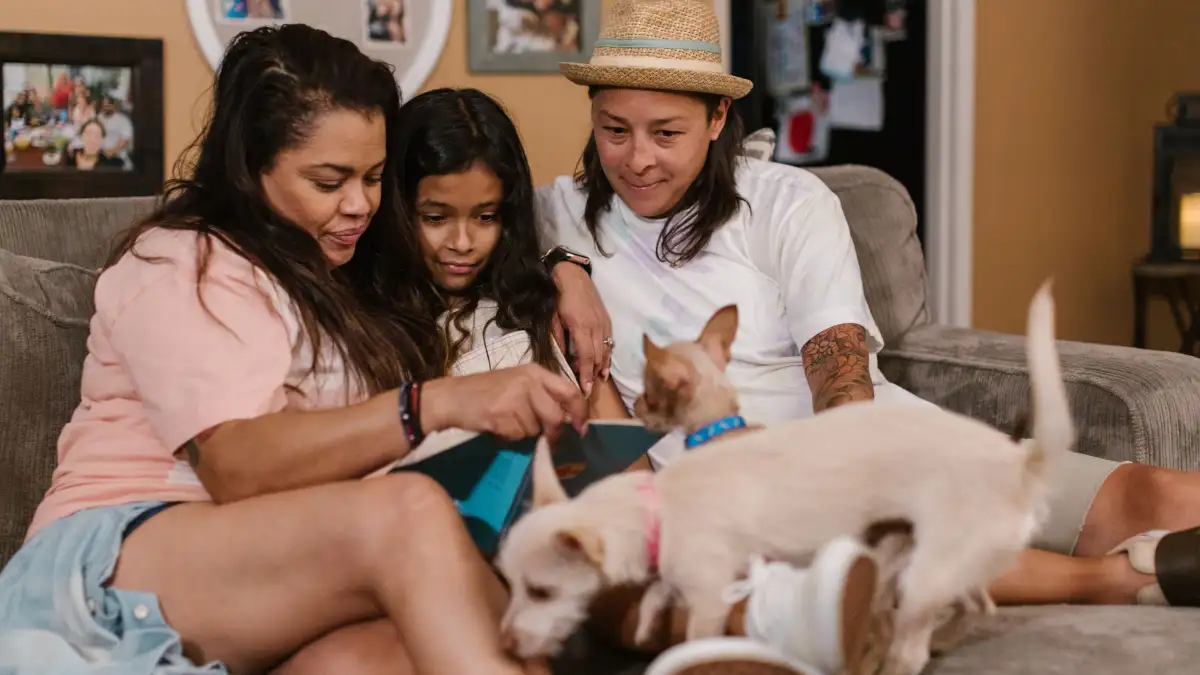
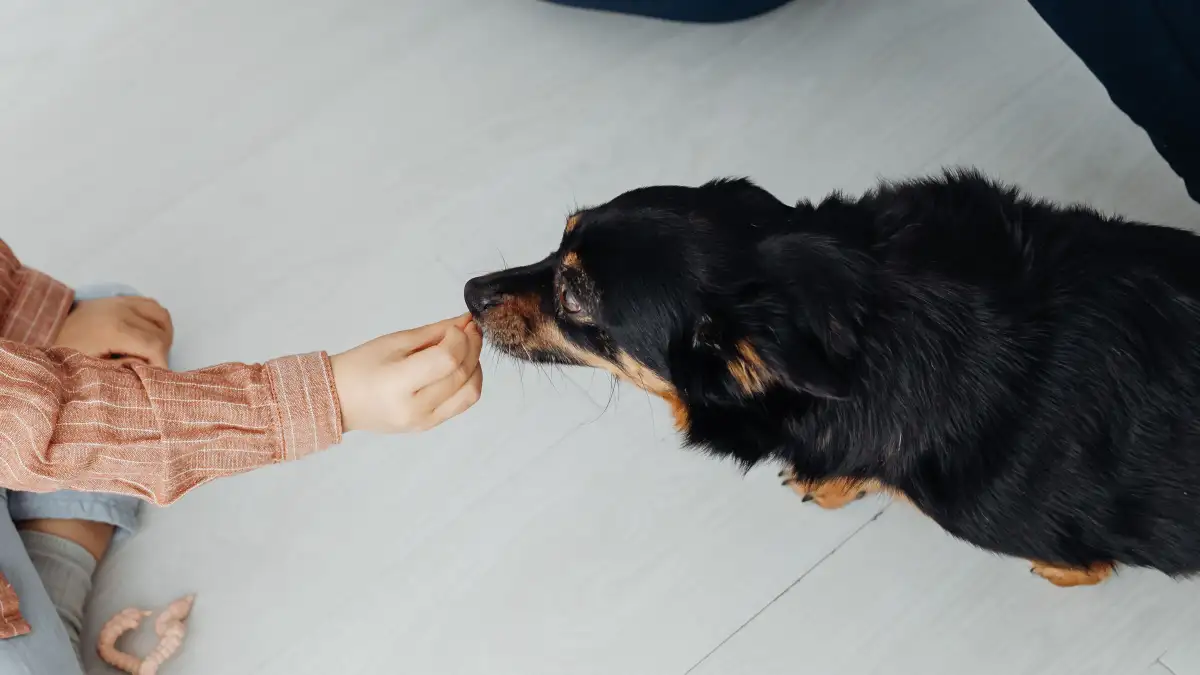
With children: everyone sits, the dog comes to them, treats get dropped on the floor rather than handed over, and nobody hugs the dog for a while. Let the dog leave. If it leaves, that is working.
With a cat: swap scents first, then a barrier the cat can slip through but the dog cannot, then short supervised sessions with a clear exit. The cat needs to win every early encounter. If the cat does not get to walk away, the whole thing resets.
With another dog: parallel walks at a distance, gradually closing the gap, then a neutral yard or a friend's fenced space, not the resident dog's living room. Separate feeding bowls and separate sleeping spots from day one, and keep them separate whenever nobody is watching.
Slow is not a delay. Slow is the method.
None of this stays the same
The dog that fit your house when your kid was six is a different dog by the time your kid is sixteen and the dog is eleven. Exercise needs drop. Grooming needs go up. Stairs get harder, slick floors get scarier, and a ramp or a runner rug does more good than any training cue. The kid who once needed gates is now the one who can carry the dog up the steps.
So revisit it. Once a year, ask the same questions again. What does the energy look like now. What does the dog need now. Who is actually doing it. The answers will change, and the routine should change with them.