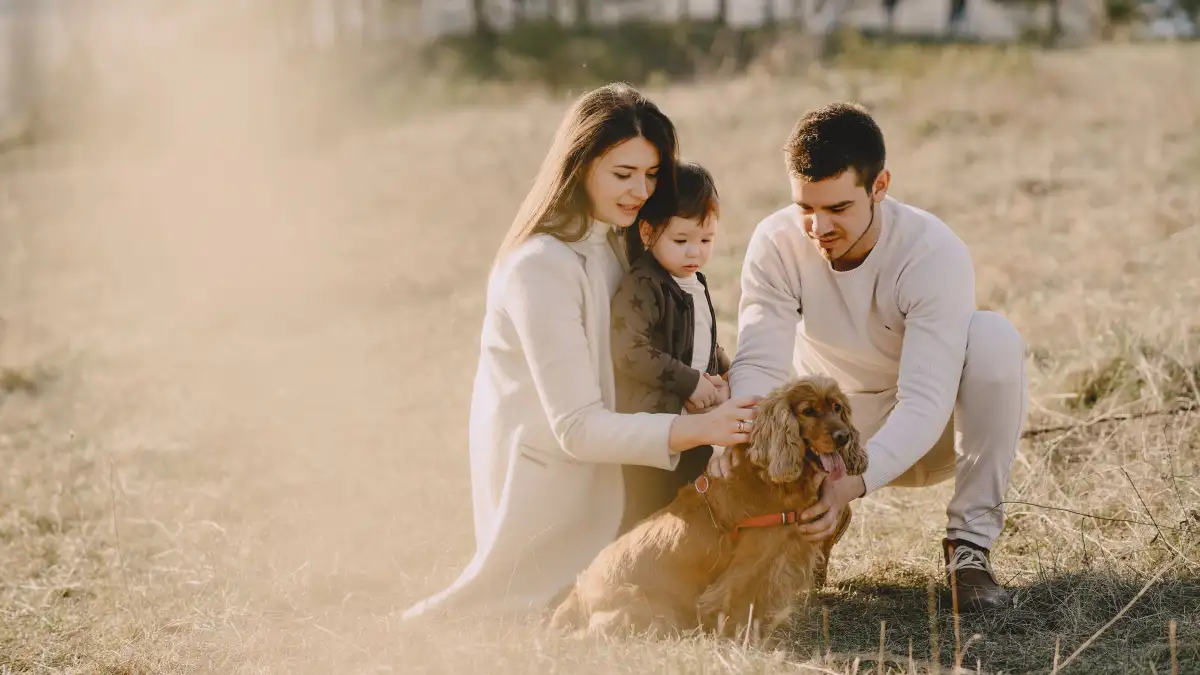
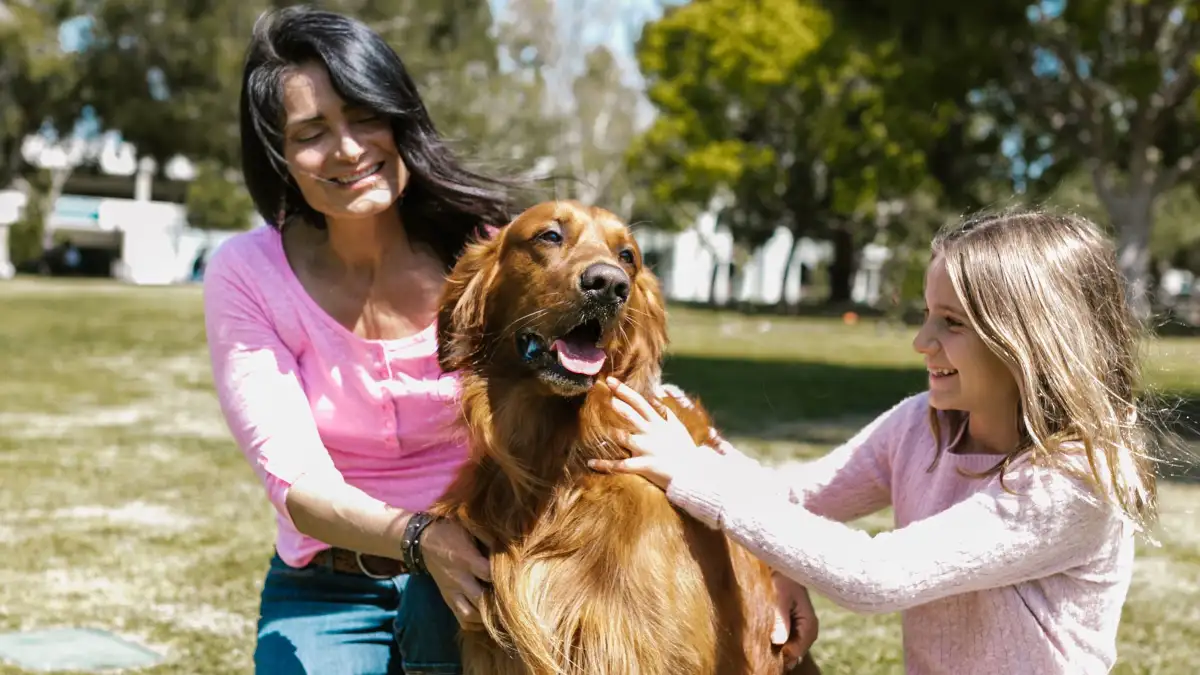
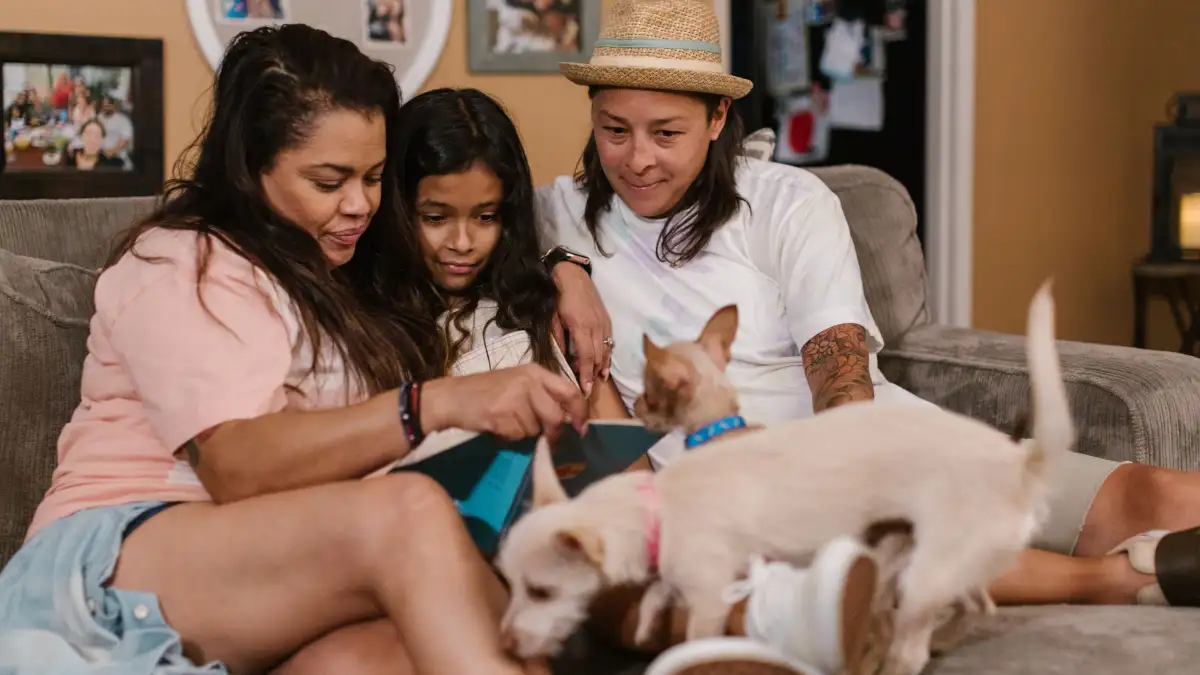
Start with the floor and the dog's own routes through the house, not with a shopping list. An aging family dog usually loses the ability to move safely across a room before it loses the desire to be in the middle of everything, so the changes that actually matter are traction on the paths it already walks, a ramp or shallow steps at the one or two places it still insists on climbing, a bed it can reach without crossing kid traffic, and a short set of rules the children can remember without being reminded. Everything else is decoration.
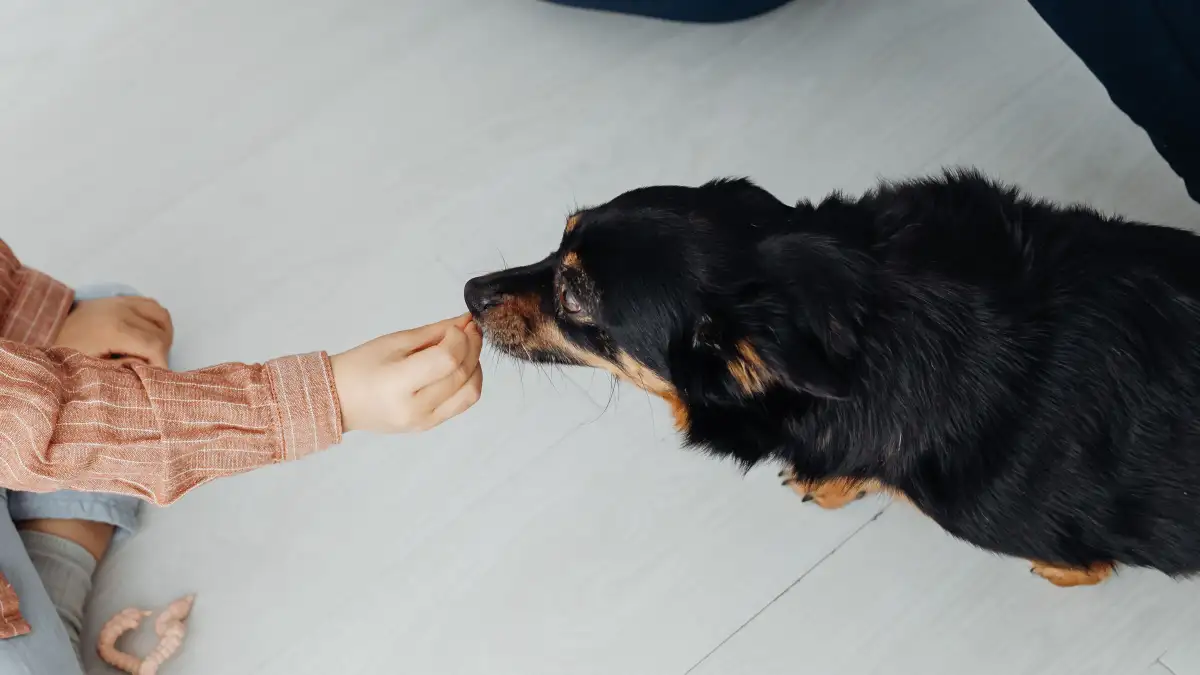
I heard it before I saw it. A scramble of nails on oak at the top of the hall, four feet hunting for grip that wasn't there, and then a long pause. That pause is the part I'd never noticed before. For nine years our dog came down that hallway like a bowling ball, all momentum, and then one Tuesday she stood at the corner and waited for the kids to clear out of the kitchen before she would commit to the turn.
Stand in your own hallway tomorrow morning and listen. Not for a whimper, not for anything dramatic. Just listen to whether the feet make a clean sound or a skittering one. The skitter is the whole diagnosis you need to start working from.
The floor comes before the ramp
Hardwood, tile, and laminate are the same surface to a dog whose back end isn't as reliable as it used to be. Slick.
The mistake I made first was buying one big area rug and calling it done. Dogs don't walk down the middle of a hallway. They hug the wall, they cut the corner into the kitchen, they turn tight at the bottom of the stairs. Those turning points are where the slipping happens, so the rug path has to cover the corners, not just the long straight runs.
What that looked like at our house: a runner down the hall, a washable rug right at the kitchen threshold, one at the landing where the stair transitions to wood, one beside the couch where she pushes up to standing. Low pile, rubber backing, machine washable, because a dog lying on the floor all day means hair and the occasional accident.
Two rules I'd pass along. Thick, plush rugs catch claws and trip kids, so keep the pile flat. And a loose rug with no grip underneath is worse than bare floor, because now the floor moves too.
While you're down there on your hands and knees, look at the nails. When the clicking gets louder on hard floors, the grip is getting worse. Shorter nails mean more of the paw pad contacts the ground. That's a grooming task that doubles as a safety feature, and it's one of the first things that quietly slips when a dog stops enjoying the process.
Where the ramp goes, and where it doesn't
I bought the wrong ramp first. Too steep, too narrow, and I set it up right in the middle of the path the kids use to get from the back door to the living room. It got knocked over twice a day and used as a slide every single afternoon.
The ramp that works is at the one step into the garage and the two steps off the back porch. Shallow angle, wide enough that the dog isn't worried about her feet, and parked against the wall in the mudroom instead of in the running lane. If your dog has spent years jumping onto the couch, that's the other spot worth solving, but it doesn't have to be a ramp. A low, sturdy ottoman placed as a halfway step does the same job, and it doesn't become a toy.
Kids will absolutely test any ramp you install. You can gate it, or you can teach the rule, and I ended up doing both, because a nine-year-old remembers a rule about 70 percent of the time and a four-year-old remembers it never.
A bed with a border around it
The single most useful change in our house wasn't for the dog's body. It was for the dog's nerves.
An older dog in a house with children needs one place where nobody follows. Not a bed you point at and say "go lie down" while a kid trails after. A physical boundary. Ours is a crate with the door taken off, pushed into the corner behind the couch, plus a baby gate that sections off the end of the hallway during the loudest part of the afternoon.
Here's the part people skip: the dog also needs to be able to leave a room on its own. An older dog that can't get up and walk away from a hug that hurts is an older dog that eventually corrects a child, and a growl or a snap is what happens when the exit has been closed off. Give the dog a door and the growl usually never comes. Take the door away and you're relying on a patient animal to stay patient forever, which isn't fair to either of them.
Watch where the noise is, too. If the television, the front door, and the kitchen are all in one open room, that room is not a rest area no matter how nice the bed is. Ours got moved twice before it landed somewhere the household doesn't pass through.
A script beats "be gentle"
"Be gentle" means nothing to a five-year-old. I stopped saying it and started giving four instructions instead.
- Hands flat, palm down, let the dog walk to your hand. No reaching over the head.
- Two strokes on the shoulder, then stop. If the dog leans in for more, keep going. If the dog stays still or turns away, you're finished petting.
- No leaning on, sitting on, lying on, or picking up. For a dog whose hips are doing less than they used to, a child's weight across the back is the difference between standing up and falling down.
- A dog on its bed is invisible. You don't talk to it, you don't pet it, you don't bring it a toy.
And when the growl happens, and it might, treat it as information rather than disobedience. Move the child away, don't yell at the dog, and don't punish a warning. A dog that gets scolded for growling learns to skip the warning, which is the last thing anyone in a house with kids wants.
Then give the children a job that fits the dog's new limits. Filling the water bowl, carrying the food dish, coming along on the short walk, brushing in slow strokes on the floor. Kids who have a job stay calmer around a dog than kids who are just told to stay calm.
Shorter walks and a pace the dog sets
The distance we used to cover, we now do in two pieces. Same route, split in half, one in the morning and one in the evening, and she's better for it than she was on the single long one.
Sniffing counts as exercise. If your dog wants to stand and read the same patch of grass for four minutes, that's not wasted time, that's the walk. What I watch for is whether she's still willing to come home at the end or whether I'm carrying her, and that answer tells me more than any rule about minutes.
If your kids sprint ahead on walks, one adult has to be the wall. I hold the leash and the boundary at the same time, and my rule is simple: nobody runs past the dog from behind, because that's the direction a dog can't see coming.
Surface matters as much as distance. Grass, packed dirt, the shoulder of the road. Hot asphalt in July on a dog that's already slow to get up is a bad combination, and it's the kind of thing that's easy to forget when the kids are the ones begging for the longer loop.
Nails, brushing, and the parts you do on the floor now
Grooming sessions got shorter and lower. Ours happens on a rug on the living room floor now, not on the table, because a dog who can't reliably stand for ten minutes shouldn't be asked to balance on a raised surface. Two or three minutes at a time, a few times a week, does more than one long session that ends with everyone frustrated.
Nails first, gently, a little at a time. Then the spots that mat up when a dog spends more hours lying on one side than it used to, which for us is the hip and the shoulder. Paw fur between the pads is worth checking too, because long fur there cancels out the traction you just bought with all those rugs.
Checkups, and the note on the fridge
Routine veterinary visits matter more now, not less, and the reason is timing. Age-related changes are easier to work with when they're noticed early, and a dog that's good at hiding discomfort isn't going to announce anything at home.
What helps the most is that I keep a note on the fridge and bring it in. Not conclusions, just observations. Slipped on the kitchen floor twice this week. Didn't do the stairs after Tuesday. Stood at the bottom of the porch for a while before coming up. Started sleeping on the hard floor instead of the bed. Those notes are worth more to a veterinarian than my guess about what's wrong, and I don't have to guess at all, which is a relief in itself.
Build it so you can add to it
None of this is a one-time project, and I think that's the honest part that gets left out. The runner path will need another rug. The bed will need to move when the dog decides it doesn't like the draft there. The ramp might get replaced with something shallower in a year.
It depends on your house, too. A single-story ranch with carpet is a completely different job from a split-level with the bedrooms upstairs, and if the dog can no longer do the stairs, the family's sleeping arrangements are the real conversation, not a piece of equipment.
There are tradeoffs and I won't pretend otherwise. Rugs collect hair and need washing. Gates are annoying to step over with an armload of laundry. Someone will trip on the ramp at least once. Those costs are real, and they're still smaller than the cost of a dog who stops following the family from room to room because the floor stopped being walkable.
The goal isn't to turn your house into a hospital. It's to keep the dog in the middle of things, which is where she's always wanted to be, for as long as she can get there on her own feet.