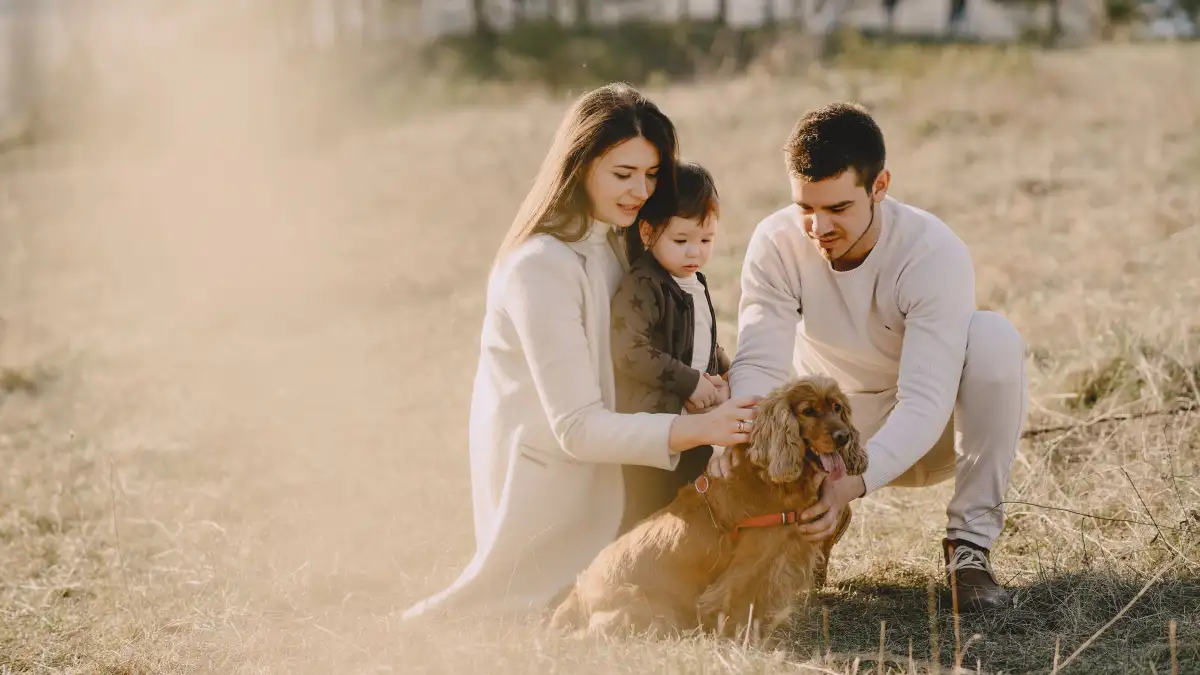
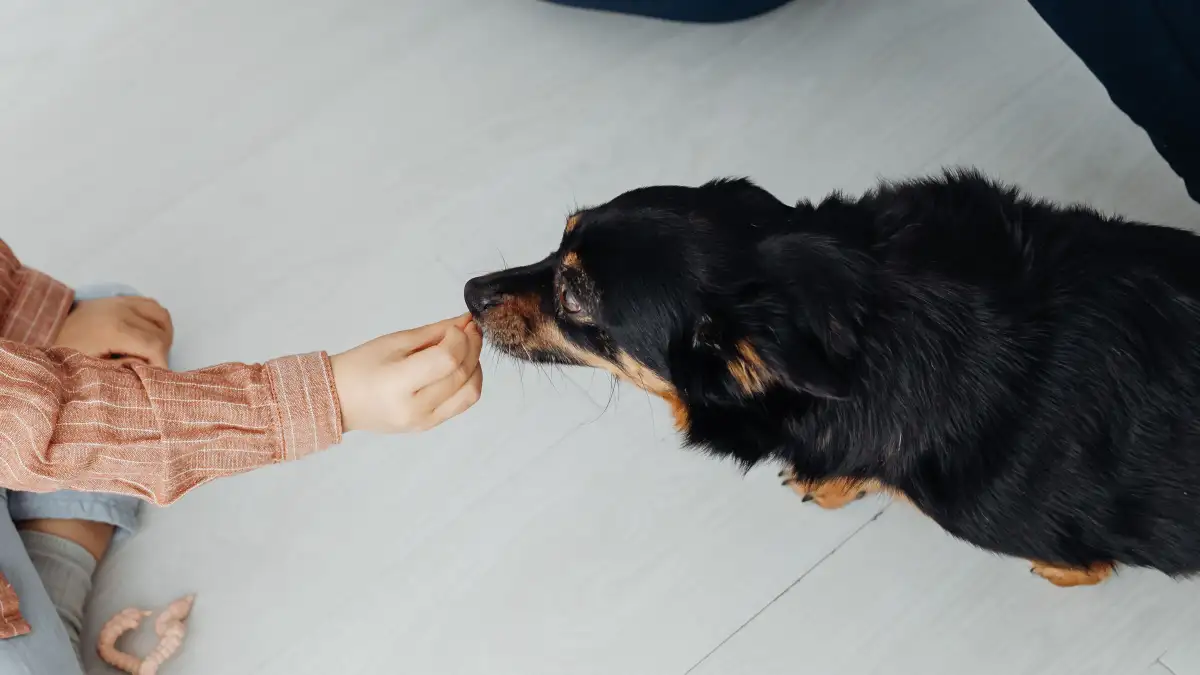
The work that actually changes the outcome happens weeks before the due date, not the day you come home from the hospital. Shift the dog's feeding, walking, and sleeping routines early enough that the new version is old news, decide which rooms the dog can and cannot enter and put the gates up long before anyone needs them, play recorded infant sounds at a volume the dog barely registers while pairing them with something the dog already likes, and get a baby-scented item into the house before the dog ever lays eyes on the baby. None of that guarantees a calm introduction, and none of it replaces supervision or separate space once the baby is home, but it keeps the arrival from being the first time the dog's world has moved.
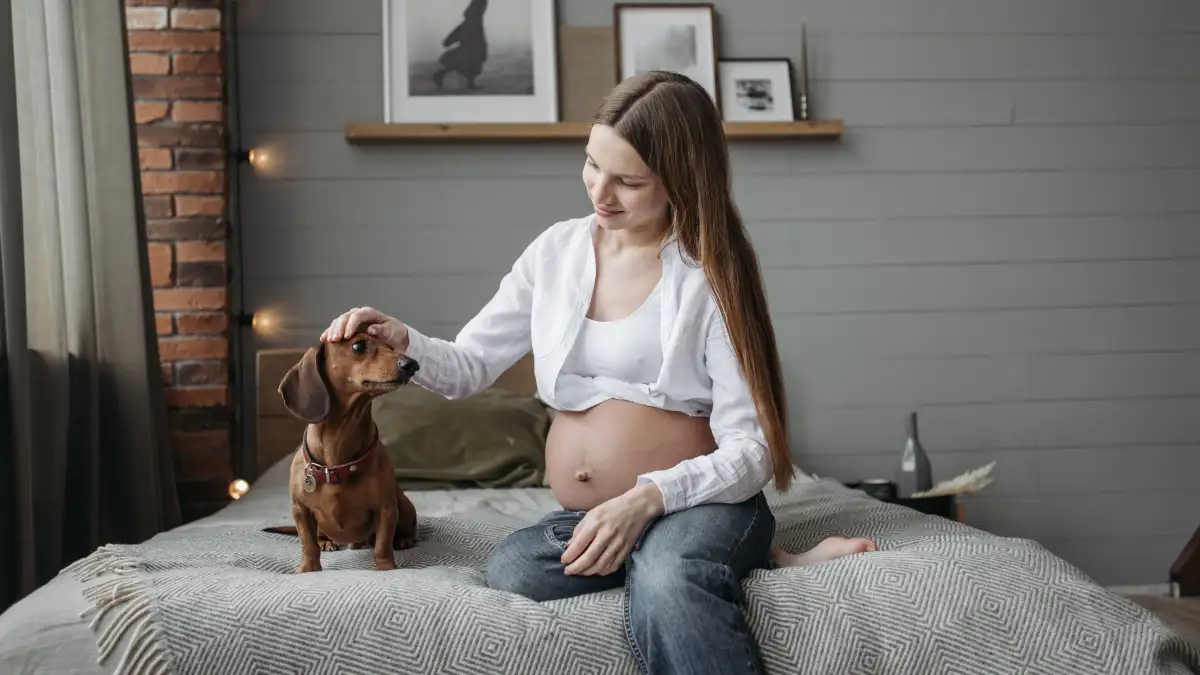
The mistake I see most often, and the one I made myself, is treating this as an introduction problem. It isn't. The introduction takes ninety seconds. The rest of the dog's life takes years. What blindsides a dog isn't the baby. It's the collapse of a schedule the dog could set a clock by.
So the calendar runs backward from the due date, not forward from the birth.
Move the routine while you can still be boring about it
Your dog eats at 7:15 in the morning. After the baby, it'll be 6:30 or it won't happen at all. Don't wait for the baby to find out which one it is. Start nudging the bowl earlier by ten minutes every few days until 6:30 is simply when dinner happens. Same for the walk.
Here's the part I'd underline. Only make changes you intend to keep. A lot of people rehearse a temporary schedule during the third trimester and then revert the week the baby comes home, which means the dog gets disrupted twice. If the walk is moving to 5:45 a.m. because that's the only window you'll have, start walking at 5:45 now. If the walk is getting shorter, make up the difference with sniffing time. Fifteen minutes of standing still while the dog reads one hedge is closer to a real walk than twenty minutes of brisk forward motion, and it costs you almost nothing when you're running on four hours of sleep.
Sleeping arrangements are the one people flinch at. If the dog sleeps on your bed and you already know that stops when the baby arrives, that change starts now, not on the night you come home wrecked and emotional. Moving a dog off the bed is a two-week project done calmly in advance and a disaster done in one night.
Sound work is supposed to be boring
Play recorded infant sounds at a volume your dog barely notices. Not background music. A notch above silence. Pair it with a chew or a food puzzle, keep it to a few minutes, and sit nearby while it happens.
Read your dog, not the recording. If your dog keeps chewing, the volume is fine. If the chewing stops and the head comes up, you're too loud or too close, and the session is over. The goal isn't for the dog to love the sound of a crying baby. The goal is for that sound to be the least interesting thing in the room.
Two things I'd say plainly, because most write-ups skip them. First, a phone speaker at low volume is not a rehearsal for the real thing. A real newborn cry is sharper, more sudden, and arrives at 3 a.m. when everyone is raw. Familiarity helps; it does not inoculate. Second, don't play crying sounds only while you're out of the house. A sound the dog only ever hears alone is a sound attached to being alone. If you can't be there, skip it that day.
And if your dog is already jumpy about noises in general, the trash truck, the doorbell, the neighbor's leaf blower, the baby cry recording isn't going to skip to the front of the line. That dog needs a qualified behavior professional involved before the birth, not a louder recording. There's no version of this where you push through on your own and it works out.
Decide the access rules before the baby can test them
Pick where the dog goes when it wants to be left alone, and build that spot now. A crate, a bed in a back room, a corner behind the couch. Feed there. Give every high-value chew there. Never use it as punishment, not once, not even when you're frustrated. That spot is the dog's off-switch, and you're going to need it in about four months.
Baby gates go up early, weeks early, so the dog walks past them like they're furniture. The nursery is either fully off-limits or entered only with you. Say that rule out loud to your partner, your mother, the friend who's coming to let the dog out, and write it somewhere so it survives a chaotic week.
New objects should appear early too. A crib in a spare room for three weeks is furniture. A crib that materializes the same day the baby does is a stranger. Same with the stroller in the hallway, the swing, the bouncer. Park them around the house while nothing is happening, and let the dog sniff them without commentary from you.
Scent does more than sight
The item from the hospital, a hat, a blanket, whatever they'll let you take, comes home before the baby does. Have it brought by whoever's coming to check on the dog. Set it down where the dog can choose to investigate. Don't hold it up to the nose, don't hover, don't narrate. Sniff and walk away is a perfectly good result. Standing over it and refusing to leave is information you want to have before the first meeting.
One honest caveat: that item smells like a hospital as much as it smells like your baby. It's a preview, not the whole story.
The first meeting should be small
Two adults. One on the dog's leash, one holding the baby. Not in the doorway, not in the driveway, not during the frantic first ten minutes when you're all hauling bags.
If you can arrange it, let the dog greet the returning parent first, alone, in the yard or the front room. That reunion is going to be enormous no matter what you do, and spending it on the dog before the baby enters means the baby isn't standing in the middle of a hurricane. Then bring the baby in. The dog stays leashed. Distance is the dog's choice. Sniffing is allowed and encouraged. Jumping ends the meeting, calmly, and there is no penalty. There will be a thousand more meetings.
After the birth, the gates matter more, not less
Supervision is not a phase. It's the arrangement. A baby who is content to lie still becomes a baby who rolls, then crawls, then walks straight into the crate with a fistful of dog food. That's when the space you built in advance earns its keep. The dog's retreat stays the dog's retreat. A crawling baby is not allowed in it, ever, and that rule gets firmer as the baby gets faster.
Predictable routines carry the rest. Same feeding time, same walk order, same settling spot at night. The baby is going to be unpredictable enough for everyone; the dog's day should not be.
And the line I won't soften: never leave a dog and a baby alone together. Not for a diaper run, not for a phone call, not because the dog has been perfect for six months. Not because the dog is bad, but because a baby can't read a dog's signals and a dog can't reason like an adult. Every preventable bite story starts with a door that closed for thirty seconds.
What I'd skip
The doll-carrying routine. Some people swear by it. It doesn't teach a dog anything about a real infant, and it can just as easily teach a dog that the strange-smelling object gets lots of your attention. If it helps you practice your own handling, fine. Don't expect it to do anything for the dog.
What you're actually doing here isn't teaching your dog to love the baby. You're making sure the dog still lives in a house it understands, with a schedule it recognizes and a place it can go. Get that right and the introduction is a small event instead of a reckoning. Get it right months early and you won't be improvising it in a hallway with a car seat in one hand.