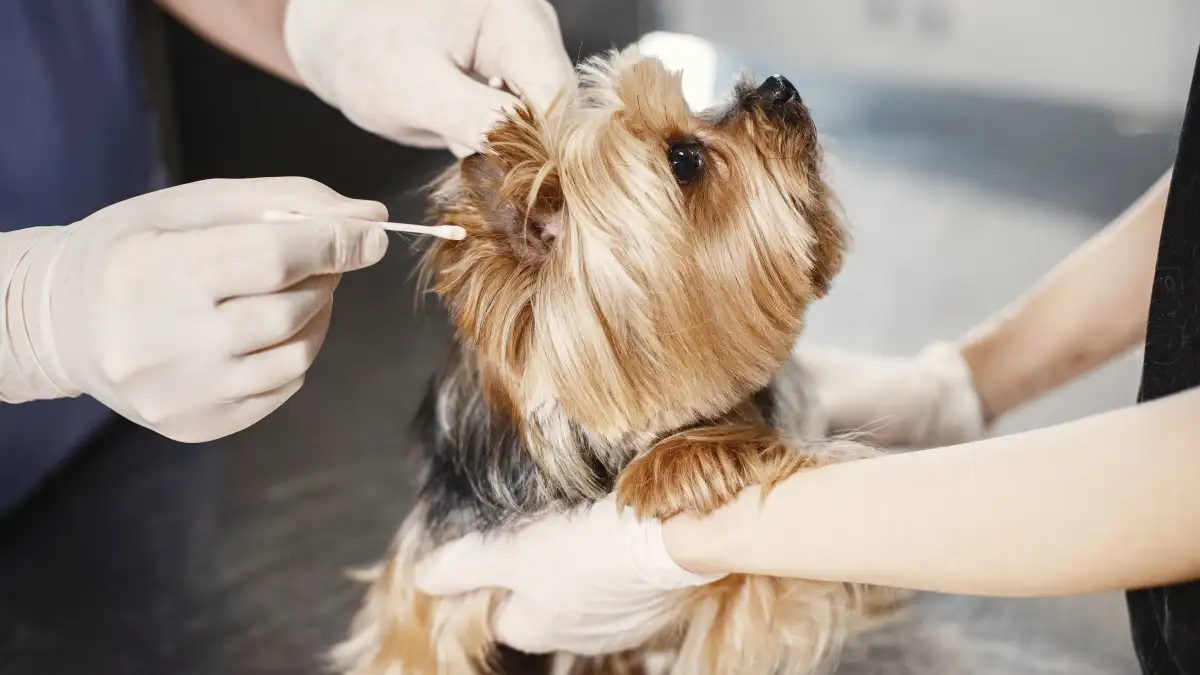
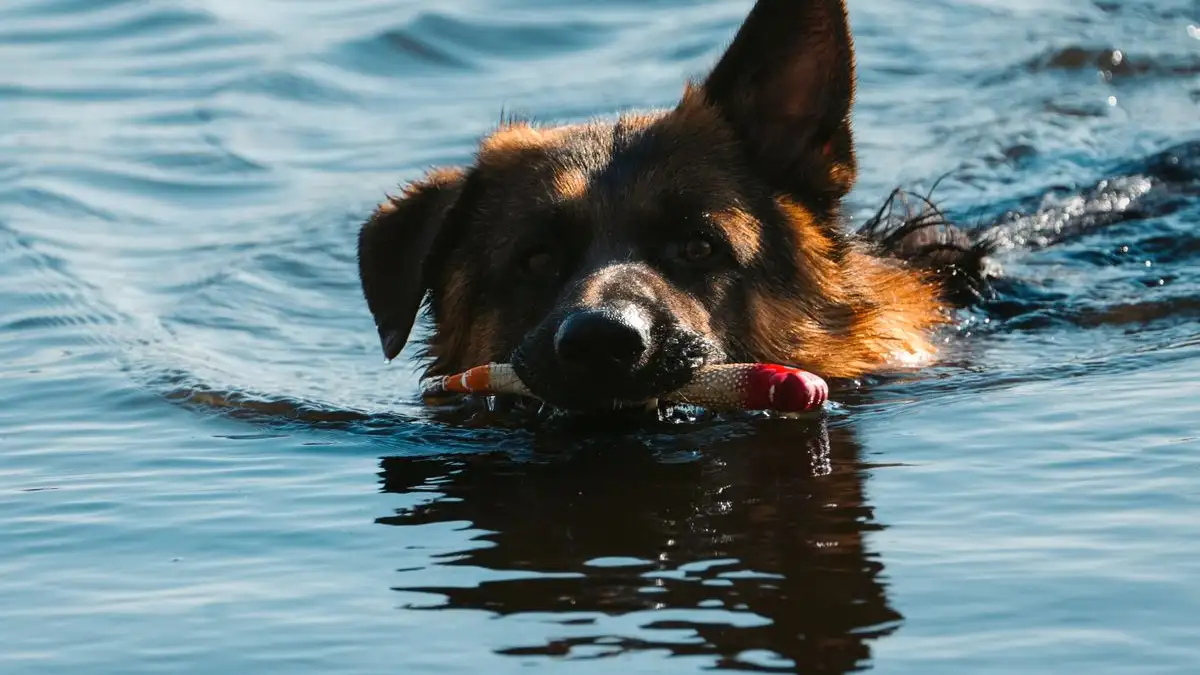
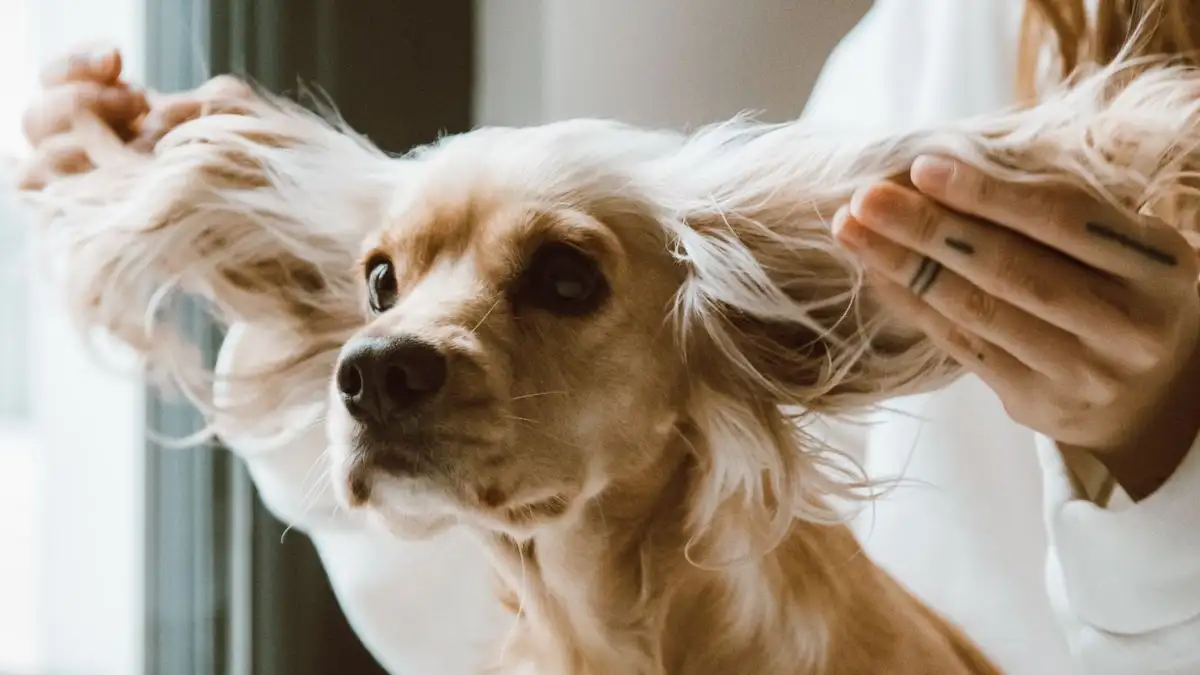
There is no universal calendar for cleaning a dog's ears, and any number you've read — once a week, once a month — is one dog's answer applied to every dog. The owners who get this right stop counting weeks and start reading four things: the shape of the ear, how much water gets into it, whether allergies are in play, and how the ear responded the last time it was cleaned.
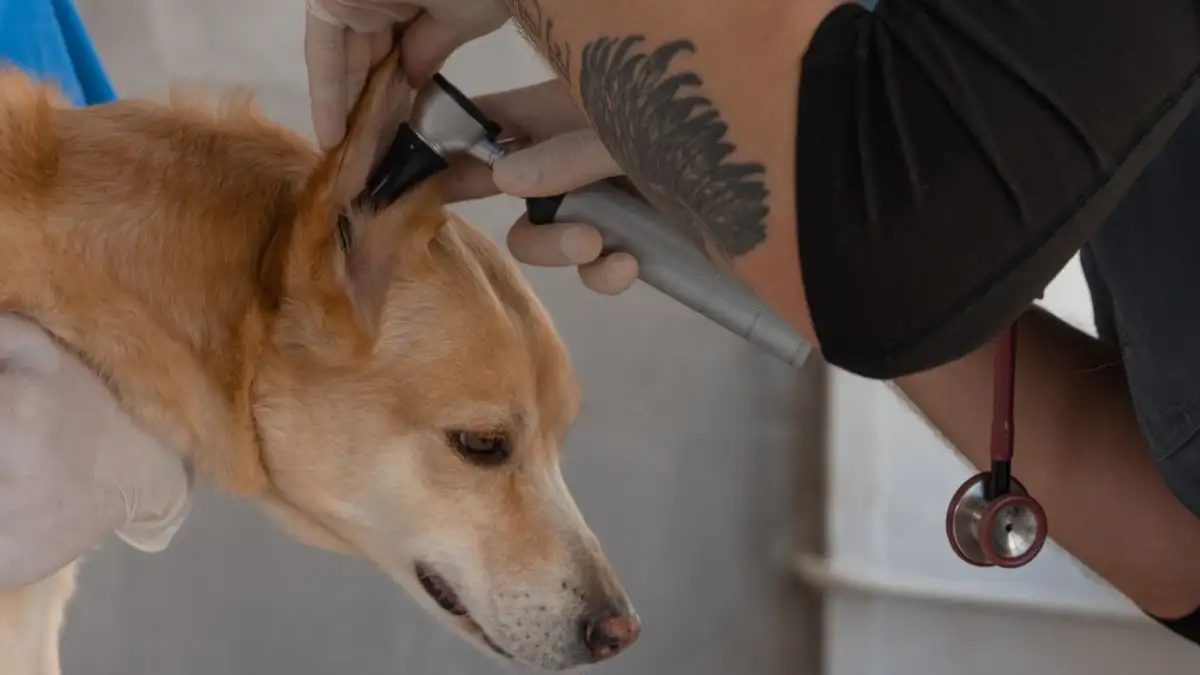
I keep a bottle of cleaner under the sink, behind the extra toothbrushes, and most weeks it stays there. The night I stopped thinking of ear cleaning as a chore on a schedule, I was on the bathroom tile with a dog's head heavy in my lap, one hand folding the ear flap back, the other holding a flashlight I never ended up using. What I was doing wasn't cleaning. It was reading.
Here is what I check, in order, and what each answer tells me about the calendar.
Look First, Decide Second
Lift the flap. The canal is shaped like an L — it drops down from the opening, then turns inward toward the eardrum, which is why nothing you do with a fingertip or a cotton swab reaches the part that actually matters. What you can see is the vertical canal and the inside of the flap, and that is plenty to make a decision.
A healthy ear looks boring. Pale pink, or darker if the dog has dark pigment there. Dry to the touch. No crusting, no sticky film, no angry red streaks. I lean in and smell it. A healthy ear smells like almost nothing, maybe faintly like the dog's coat. That smell test does more work than any calendar on the internet.
What tells me I can stretch the interval
- The ear is dry and pale when I look
- No smell at all
- Nothing on the gauze after a wipe
- The dog isn't pawing at it, tilting, or shaking
- The last cleaning didn't leave the ear red or itchy
If all five hold, I'm not cleaning. I'm checking — a quick lift of the flap every week or two — and cleaning only when there is wax to remove. For some dogs that adds up to two or three times a year, and they are no worse off for it.
What tells me to look more often
- The ear feels warm, or pinker than the other one
- A yeasty or sour smell
- Dark brown or gray debris on a clean gauze
- Head shaking, one-sided scratching, or a tilt
- Redness, or a flinch when the flap is touched
Some of those mean clean and watch. Some mean stop and call the vet. I'll get to that line.
Ear Shape Does Half the Work
A German Shepherd, a Husky, a Corgi — anything with ears that stand up — has air moving through the canal all day long. Airflow keeps the canal dry, and a dry canal doesn't grow much. Dogs like that often need routine cleaning measured in months, not weeks. Sometimes they need none at all beyond a regular look.
Floppy ears are a different job. A Cocker Spaniel, a Basset Hound, a Golden — the flap covers the opening and traps warmth and moisture. Add a canal that grows hair, which is common in Poodles, terriers, and Schnauzers, and you have built a small humid room with no windows. Those are the dogs where a light routine actually earns its place: check weekly, clean every two to four weeks if the gauze comes away dirty, and not at all if it doesn't.
I don't apply one dog's schedule to another. The difference between an erect ear and a heavy floppy ear is not subtle once you've handled both.
Water Is the Real Trigger
Every swim, every bath, every hose-down in the yard is a moisture event. That is the thing to count — not days of the week.
But here is the part I had to learn slowly: water does not automatically mean cleaning solution. If the ear was clean before the swim, adding liquid cleaner just adds more liquid to a canal that needs the opposite. What that ear wants is drying.
After water, this is my order of operations:
- Let the dog shake. Really shake. That is the best ear dryer in the room.
- Wipe the inside of the flap and the parts of the canal I can see with a dry gauze square.
- Give it a few minutes of airflow — ear up, dog distracted with a treat.
- Only if the gauze came away waxy or smelly does the cleaner come out.
For a dog that swims hard in summer, checking after every swim and cleaning only when there's something to remove could work out to every ten days or so in July and nothing at all in January. Same dog, same ears, completely different calendar depending on the season.
The Case for Doing Less
The ear canal makes wax on purpose. That wax is slightly acidic, it traps dirt, and it keeps the skin of the canal from getting soggy. When you flush it out every week, you remove the layer that was doing the work, and the canal responds by producing more — which looks exactly like a reason to clean again.
I have watched that loop happen. Clean, wax back within three days, clean again, and now the ear is pink and the dog is scratching at it, and nothing is wrong except that the ear was never left alone long enough to settle.
Signs you're on the wrong side of that line:
- The ear is red right after cleaning and stays red for an hour
- The dog shakes its head or scratches immediately afterward
- Wax seems to return faster than it used to
- The skin inside the flap looks shiny or irritated
If that's what you're seeing, the answer is not a stronger cleaner. It's spacing the cleanings out further and letting the ear rebuild what it had.
When the Vet Sets the Schedule Instead
If your dog has allergies — seasonal, food, or environmental — the ears are usually the first place it shows up. The same goes for a dog with a history of ear infections. In those cases I don't guess at intervals from my bathroom floor. The vet looks into the canal and sees what I can't, then gives a maintenance rhythm built around what's actually happening in there. That is a different instruction than anything I would arrive at by sniffing gauze at home, and it's worth asking for by name at a regular visit.
Where Cleaning Stops and Calling Starts
Cleaning is for wax, dirt, and the post-swim wipe. It is not for these:
- Discharge — yellow, green, or pus-like
- A strong smell that survives a gentle wipe
- Redness that doesn't fade, swelling, or a canal that looks narrowed
- Crying out or snapping when the ear is touched
- A head held tilted, or circling
- The same symptoms coming back within days of a cleaning
That isn't a cleaning problem. Stop, leave the ear alone, and call your vet. Working cleaner into an already inflamed canal makes it worse, and it obscures the very thing the vet needs to see.
Tools and Touch
Cotton balls or gauze squares, not swabs pushed down into the canal. A veterinary-labeled cleaner, used the way its label directs. A treat within reach, because the shake is coming and you want the dog to stand still for it. A towel if your dog flings droplets across the tile.
I use what the label says, massage the base of the ear for a few seconds until it makes that wet squelching sound, step back and let the dog shake, then wipe out whatever came up. If the gauze comes back clean, I'm done. I don't go back in for a second round just to feel thorough — that's how a good cleaning turns into an irritated ear.
The Short Version
Check ears weekly — a five-second lift and a sniff. Clean when the ear is waxy, dirty, or smelly, and dry after every swim or bath. An erect-eared dog with no issues might go months between actual cleanings. A floppy-eared dog, a hairy-eared dog, or a swimmer needs more attention but still not more product. A dog with allergies or a history of infections follows the vet's schedule, not this one.
The number you're looking for isn't a number. It's the difference between the ear you looked at last week and the ear in front of you right now.