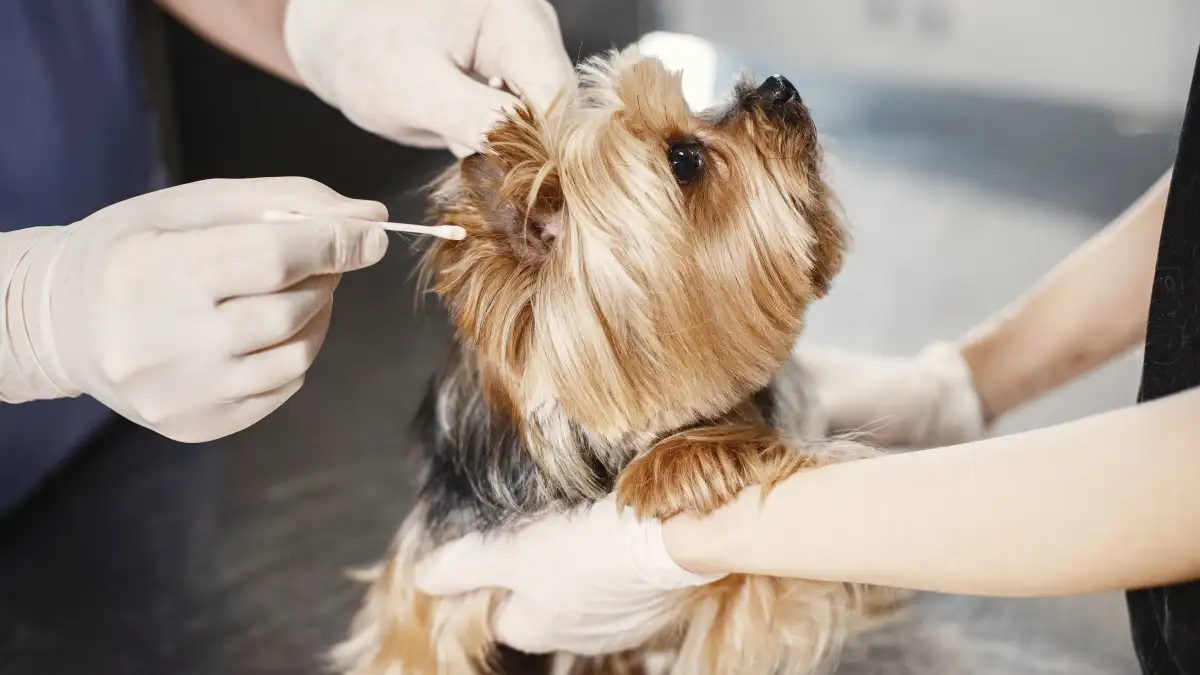
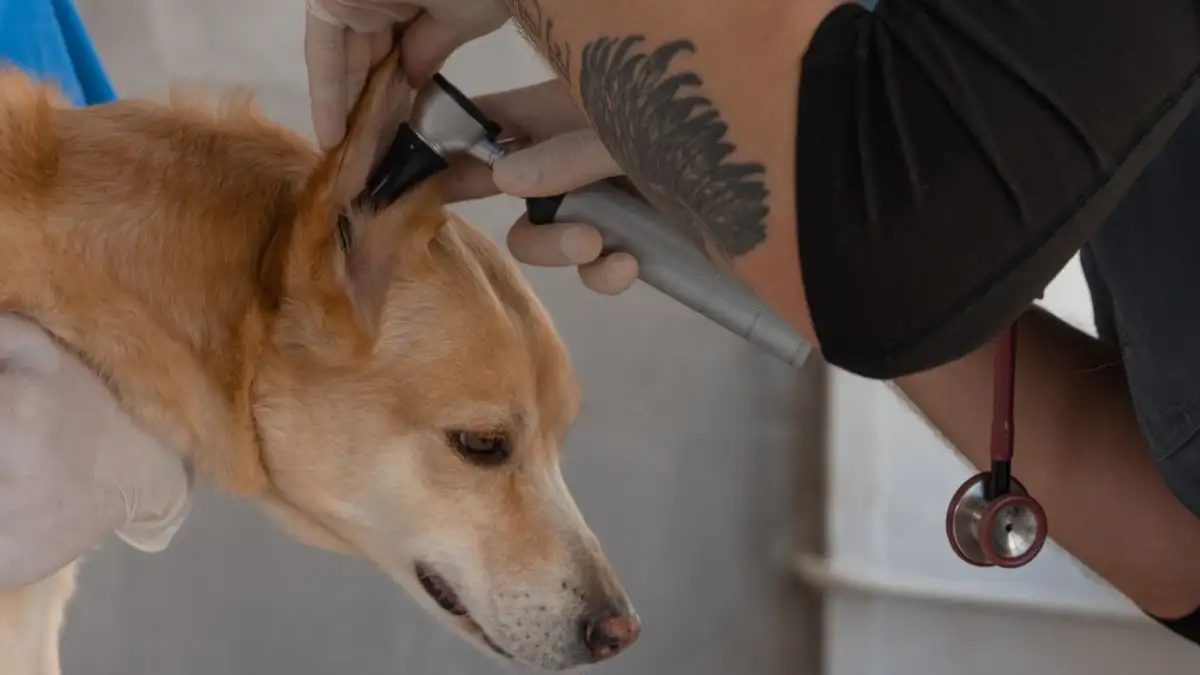
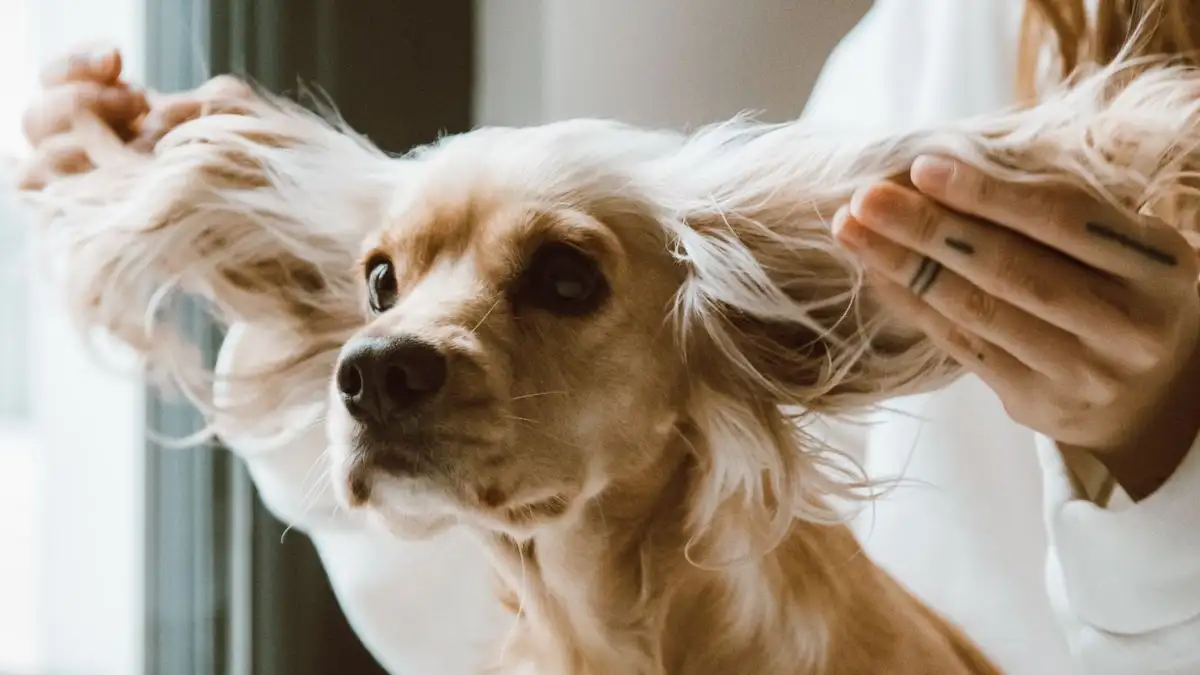
Drying a dog's ears after water means three things in this order: let the dog shake, press a dry towel over the ear flap and the folds you can actually see, then leave the ear open to air for a minute or two. Nothing goes into the canal. No swab, no fingertip, no twisted corner of a towel, no bottle tipped in as a precaution. What gets muddled most often is that drying and cleaning are two different jobs. Drying is mechanical and belongs after every swim, bath, and wet walk. Cleaning with a solution is a scheduled decision, and a wet afternoon should not be what triggers it.
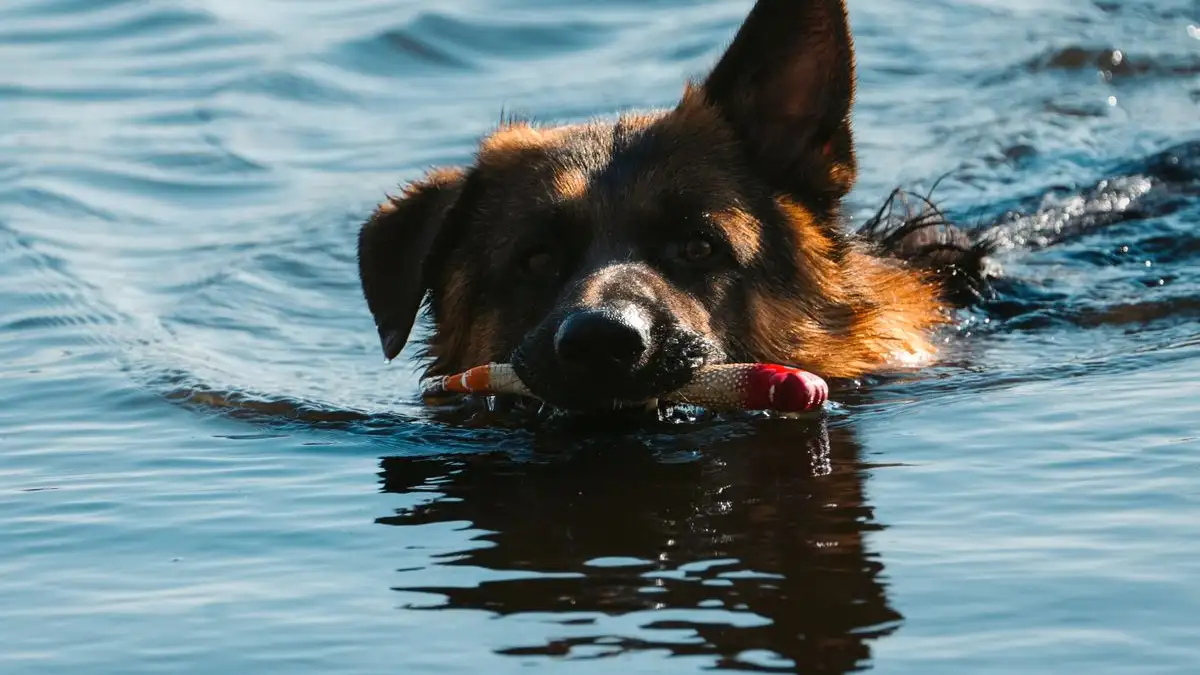
I keep a stack of old towels by the back door for exactly this, and the routine starts before I reach for one. The dog comes through the door, drops his head, and shakes, a full-body shake that begins behind the nose and travels to the tail, spraying the doorframe, the mat, and my pant legs. That shake is the best tool in this job. It throws off a surprising amount of water from the ear flap, and it does it faster than any towel. What it cannot do is reach the canal, and the canal is the part that matters.
The canal is not a straight tube. From the opening it drops down and then bends inward toward the jaw, so the whole thing is shaped roughly like a letter L lying on its side. Water that gets past the bend settles into the low corner with nothing to tip it out. That is why all the drying I do is outside work: the leather of the flap, the folds at the base where the ear meets the head, the hair around the opening. Those are the places water hides, and they are the places a towel can actually reach.
Here is what it looks like on my kitchen floor, because the description is more useful than the principle. The dog stands on a mat, non-slip, because a dog sliding on tile learns to dread this. I kneel with him between my knees so he cannot back away, one hand flat under the chin, the other holding a dry towel. I wipe the inside of the flap from the base outward, in the direction the hair grows, and I stop at the opening. Not down into it. Then I press the towel against the base of the ear for two or three seconds and let the fabric pull what is there. Then I let go. Most dogs shake again on their own. Then I step back and let the ear hang open for a minute, because gravity finishes what the towel started and it is the step almost everyone skips.
Why nothing goes into the canal
Every reason to leave the canal alone comes back to the same three facts. You cannot see what you are doing in there. The skin is thin and easy to scratch, and a scratch you cannot see is worse than the water you were trying to reach. And the ear is built to clean itself, with wax and debris migrating outward on their own, which means anything I push in, including a swab, tends to go the wrong direction.
So my rule is blunt. If I can see it, I can wipe it. If I cannot see it, it is not my job.
That matters more for some dogs than others. A dog with ears that stand up gets air moving through the canal all day long. A dog with heavy, folded-over ears has a flap lying across the opening, trapping warmth and whatever moisture is left behind. Warm, dark, and damp is the combination a canal handles least well, and that is exactly the description of a folded ear holding onto a swim. The shape of the ear does not create a problem by itself, but it does mean the drying step has more to do, and a wet ear left to sit overnight has nowhere to dry.
Swimming, bathing, and rain are not the same job
All three get the same three steps, but they deliver different amounts of water, and one of them delivers soap.
After a swim
A dog that swims gets checked after every session. Checked, not cleaned. If he swims twice in one day, that is two checks. The towel and the air step usually finish the job, and a dog that only waded or splashed mostly has a wet flap and a dry canal. Dogs that dunk their heads or dig along the bottom come out with more water in more places, and those are the afternoons I take the extra thirty seconds with the towel instead of a quick swipe.
After a bath
The bath is where the most water and the most soap end up near the ear, and it is the one I plan for instead of reacting to. I do not spray water at the head. A damp washcloth over the skull does most of the work, and I keep the lather on the neck and body rather than working it up toward the ears. Shampoo residue left sitting in the folds is an irritant, and rinse water running down the head is what carries it there, so I rinse the head last, with the muzzle tipped slightly down and away, and I keep a hand cupped at the base of each ear to send the runoff past it instead of into it.
Some owners roll a cotton ball loosely and set it at the opening of the ear before the bath to catch stray water. That works, with one caveat worth knowing. It goes at the opening, never pushed down, and if it slips out of reach, do not go after it with tweezers. Note it and let your vet take it out, because that situation turns into a longer afternoon than the bath was worth.
After a rainy walk
Rain puts less water in the canal than either of the other two, but it keeps the ear leather damp for longer, which is its own kind of problem. The flap lies against the head, so the outside of the ear stays wet long after the walk is over, and a wet ear pressed against warm skin for three hours is the situation the drying step exists to prevent.
So this one is about timing more than technique. Towel the ears at the door, before the dog settles on the couch or climbs into a crate. Take off the rain coat or the snood rather than leaving it on a damp dog. If you use a hair dryer, put it on the cool setting, hold it at arm's length, keep it moving, and never point it down the opening. Warm air on wet skin stops being useful long before it stops being uncomfortable.
The ten-second check that decides everything else
The check is the whole system, and it takes about as long as reading this paragraph. Lift the flap. Look at the skin inside: usually pale pink, a little wax in the folds, nothing dramatic. Smell it. What I am listening for is a difference between the two ears, not a smell I can name. Feel the base with two fingers for warmth and for the texture under the skin. Then let go and watch. Head shaking that keeps going after the walk. Scratching at one ear. Rubbing the side of the head along the carpet. A tilt that was not there yesterday.
I am not trying to name anything when I do this. I am checking whether today looks like yesterday. If it does, the towel goes in the laundry and life continues. If it does not, the next tool I reach for is a phone, not a bottle.
Drying is routine. Cleaning with a solution is a decision.
This is the line that stayed blurred for me longer than I would like to admit, so it is worth stating plainly. Drying happens after every water session, every time, without thinking about it. Cleaning with a solution does not. For a dog with no history of ear trouble, that is a conversation to have with your vet about whether, how often, and with what, and the answer is often less often than people expect.
There is a mechanical reason to be careful with frequency. A cleaner that goes into the canal and stays there is moisture, and moisture is the thing this entire routine is built to remove. Cleaning an ear every few days because the dog swims can leave the canal damper than the swim did. The ear is self-cleaning. My job is the outside.
I will not list kitchen-cabinet mixtures here, and I would not use one on a dog of mine. If an ear needs more than a towel and air, that is a veterinary question with an exam attached to it.
When the routine comes from your vet instead
For a dog with a history of moisture-related ear issues, the drying routine is not something to invent. It is something to be walked through: how often to check, what to look for, whether a drying product is part of the plan and how it gets used, and when to stop and call. That is a five-minute conversation at a regular visit, and it is worth having before the first wet weekend rather than after.
The same goes for a dog whose ears have been trouble in past summers. The routine might be the same three steps with a different frequency. It might include something I would not use on my own. Either way, it is your vet's call, not a decision to make from a label.
The reason to make this pleasant
Everything above only works if the dog lets you do it, and that is the part people leave out. A dog who has learned that hands near his ears mean squirming, holding, and a cold wet towel will start ducking his head the moment you reach for him. Then the ten-second check becomes a two-person wrestling match, and you stop doing it on the days you are tired, which are the same days it matters.
So I pay for access. A treat before, a treat after, five seconds of work and then done. I keep the same order every time so he knows when it ends. I use the same mat. I keep two towels in the stack so I am never pressing a damp towel against a wet ear, which just moves water around and convinces everyone the job is finished when it is not. And I make sure everyone in the house does it the same way, because a dog getting a different deal from each person learns to try his luck.
That is the whole system: shake, towel, air, check, and a treat at the end. People expect ear care to involve a bottle. In my house it involves a towel by the door and knowing when to pick up the phone.