Socializing a puppy is a curriculum, not a social calendar. What produces a steady adult dog is controlled, brief exposure to novelty across categories — people, handling, surfaces, sounds, animals, and places — each one introduced on its own, dosed low enough that the puppy stays relaxed enough to eat, and ended while things are still going well. The number of dogs your puppy has met is close to meaningless. A category grid is what tells you where the holes are.
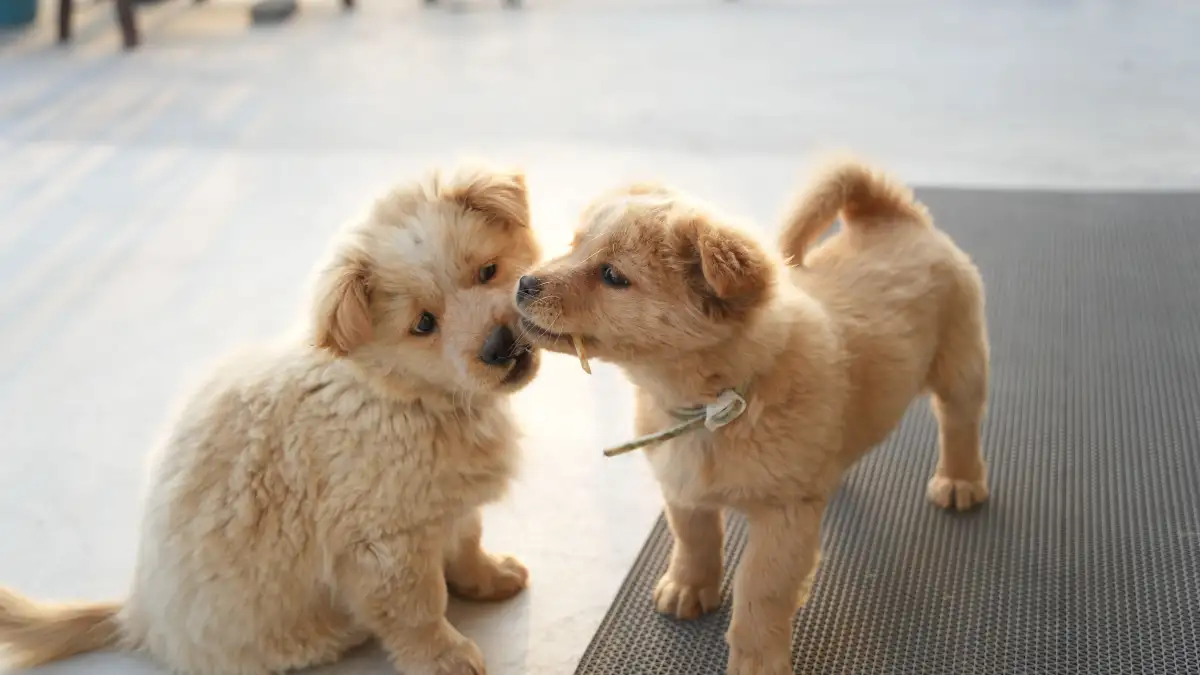
I keep that grid taped to the side of the refrigerator. On a Tuesday morning in March it is the only thing standing between me and a bad decision. Coffee going cold on the porch rail. A treat pouch on my hip with maybe a dozen pea-sized pieces of soft food left in it. The puppy at the end of a six-foot leash, crouched low, staring at a skateboard rattling down the sidewalk two houses away. My weight is already shifting forward, because some part of me still believes the cure for "scared of skateboard" is more skateboard.
The paper says otherwise. The skateboard row hasn't been touched in eleven days, and the last entry reads: froze, wouldn't take food, four minutes to sniff again. So I sit down on the step instead. I don't walk toward it. I wait, and when she swings her head back toward the pouch and takes a piece of food, I pay her and we go inside. That's the session. Ninety seconds, maybe. Then I write one line on the paper.
The score you're keeping is probably the wrong one
Most people socialize a puppy the way they'd socialize a person: by introductions. More dogs, more people, more places. The trouble is that introductions are the easiest thing to count and the least useful thing to count. If your puppy has met forty dogs and has never once stood on a metal grate, felt a nail clipper near a back foot, or heard a blender from three feet away, the tally looks great and the coverage is a disaster.
What actually counts is exposure to novelty, organized by category. I use six rows.
- People. Not "people" in general. Hats, glasses, beards, deep voices, fast kids, slow walkers, someone carrying an umbrella, someone in a high-visibility vest, someone who reaches over a fence.
- Handling. Ears, mouth, tail, paws, one nail, a gentle hold, a lift onto a table, a towel rubbed over the back.
- Surfaces. Wet grass, gravel, a wood deck, tile, a wobbling board, a metal grate, a plastic tarp on the ground.
- Sounds. Vacuum, hair dryer, blender, doorbell, garage door, dishes clattering, a balloon popping at a distance.
- Animals. A calm adult dog at a distance, a dog behind a fence, a cat on the other side of a screen door. Not a dog park.
- Places. The car, a quiet street, a parking lot edge, stairs, an elevator, the sidewalk outside a busy store at twenty feet.
Six rows, and the point of the rows is that any one of them can stay empty for weeks without you noticing. A checklist you can complete in an afternoon is a checklist that isn't measuring anything.
How much is a decision about intensity, not duration
People ask how long a session should be. The better question is how intense.
I score things loosely in my head, one to ten. A stranger passing at thirty feet while the puppy is sniffing grass is a two. The same stranger stopping to talk and reaching out a hand is a six or seven for a lot of puppies. A dozen puppies bouncing off each other in a small room is a nine, and for some puppies it's a nine on the first visit.
The working ceiling is about a four. Below four, the puppy can still learn. Above it, the puppy is just surviving, and survival is not socialization. Pushing a puppy through something frightening doesn't build tolerance either — it's the most reliable way I know to turn a neutral object into a scary one. Lower the dose. Don't try to outlast the puppy.
The signals aren't subtle once you know them. At a four or below, she's eating, sniffing, swinging her head back to check in, willing to move toward the thing and then away from it. Above the ceiling, food stops working. She freezes. She tucks her tail, licks her lips, yawns when she isn't tired, scratches, or starts scanning for an exit instead of looking at the thing. The moment food stops working is the moment the session is over. Not pause — over. Go home, write the line, try a smaller dose tomorrow.
Distance is the dial you'll use most. Duration is second. Volume is third. Whether the leash is tight is fourth, and it surprises people: a puppy on a tight leash is having a higher-intensity experience than the same puppy off-leash at the same distance. That's one reason leash greetings between unfamiliar dogs go sideways so often — the setup is already at a seven before either dog has decided anything.
One new thing at a time
Stacking is the most common mistake I make and the easiest one to avoid. If I take the puppy to a new street, on a new surface, in a new car, and a stranger wants to pet her, and it goes badly, I've learned nothing. I don't know which of the four things was the problem.
So the rule is one variable per session. A new place with nothing else new inside it. Or a known place with one new sound. Or a known sound at a lower volume than last time.
That's also why a puppy class isn't a plan by itself. A good class is a useful room — it covers the other-puppies row and part of the handling row, and it's an easy way to practice being handled by an unfamiliar person. It does not cover surfaces, the vacuum, the leaf blower, or the man with the shopping cart. It's one room in the house, not the house.
Ending early is the part that feels wrong
You stop while the puppy is still comfortable, not when she's had enough. Those are different stopping points, and only one of them teaches anything.
If I end when she's had enough, the last thing she learned about that sound or that person is that it eventually became unbearable. If I end two minutes early, the last thing she learned is that the whole thing was fine, and then food happened, and then we left. The second version is the one that compounds.
Practically, that means most sessions are two to five minutes. Three or four of those a day, tucked into things I was already doing — the vacuum runs while she's in the kitchen, the doorbell rings twice and pays out, the mail carrier walks past at the far end of the driveway. Bigger outings, once or twice a week, are for one new environment with nothing else new added.
How you know it worked
I use three tests.
First: did she eat the whole time? A puppy who takes food through the encounter was under the ceiling.
Second: how fast did she come back? Every puppy startles. The question is recovery — the time from the flinch to sniffing, taking food, and re-engaging. Seconds is good. Minutes is a sign the dose was too high.
Third, and this is the one that matters: what happened the next time? If the same thing appears a week later and the startle is smaller and the recovery is faster, you're building something. If the reaction is bigger the second time, or food stops working earlier than it did before, you pushed too hard. The answer is to halve the intensity — more distance, softer volume, shorter — not to run the same session more often.
That's the whole reason for the paper on the fridge. Memory flattens. I remember the sessions that went badly and forget the row I haven't touched since February. The log is a line per session: date, what it was, how she responded, how long recovery took, with the six categories running down the side. After three weeks, patterns you would never have noticed jump off it. The same flinch on the same row. One row untouched for a month. A category that only ever gets practiced on the weekend.
When it doesn't go to plan
A few honest caveats.
Puppies don't develop on a straight line. There's usually a stretch where things that were fine two weeks ago suddenly aren't — a sound, a stranger in a hat, a doorway. That's normal, it isn't a verdict, and it usually responds to dropping the intensity and rebuilding slowly. Some puppies are bold and need almost nothing in some rows and a lot in others. Some are cautious across the board and will always need lower doses and more repetitions.
Weeks get eaten. Someone gets sick, work runs late, the car needs a repair, and the paper shows empty rows. That's information, not failure. It tells you what to schedule first.
And the famous window — roughly three to sixteen weeks, with the steepest gains before about fourteen weeks — is a head start, not the only door. It's real, and it's why those early weeks are worth spending deliberately rather than randomly. But socialization doesn't end at sixteen weeks; it becomes maintenance. Older puppies, adolescents, and adult dogs keep learning about novelty, just more slowly. The health side of that timing — how much out-and-about time is sensible in a given week — is a conversation for your vet, not something you'll settle with a grid.
What the window buys you is curiosity as a default. Not a dog who has met the most things, and not a dog who greets every other dog on the sidewalk. A dog who, when something new shows up, checks in with you first and then goes to sniff it. That's the outcome I'm actually after, and it comes from hundreds of small, boring, unmemorable sessions that ended before anything went wrong.