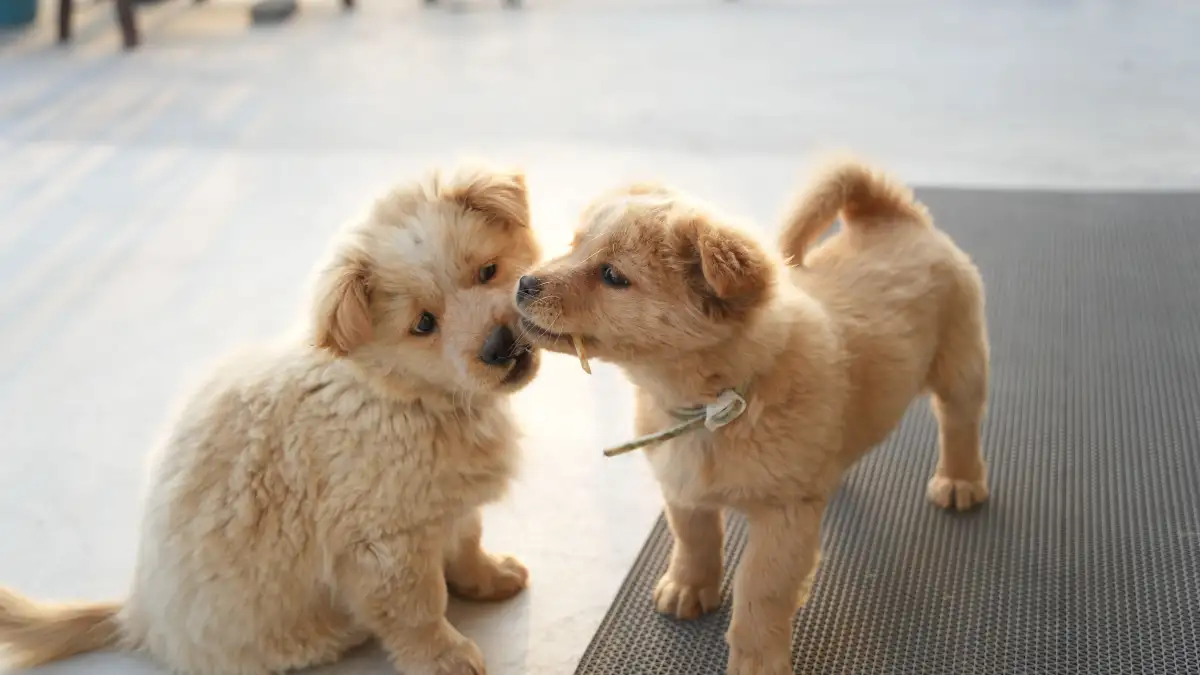
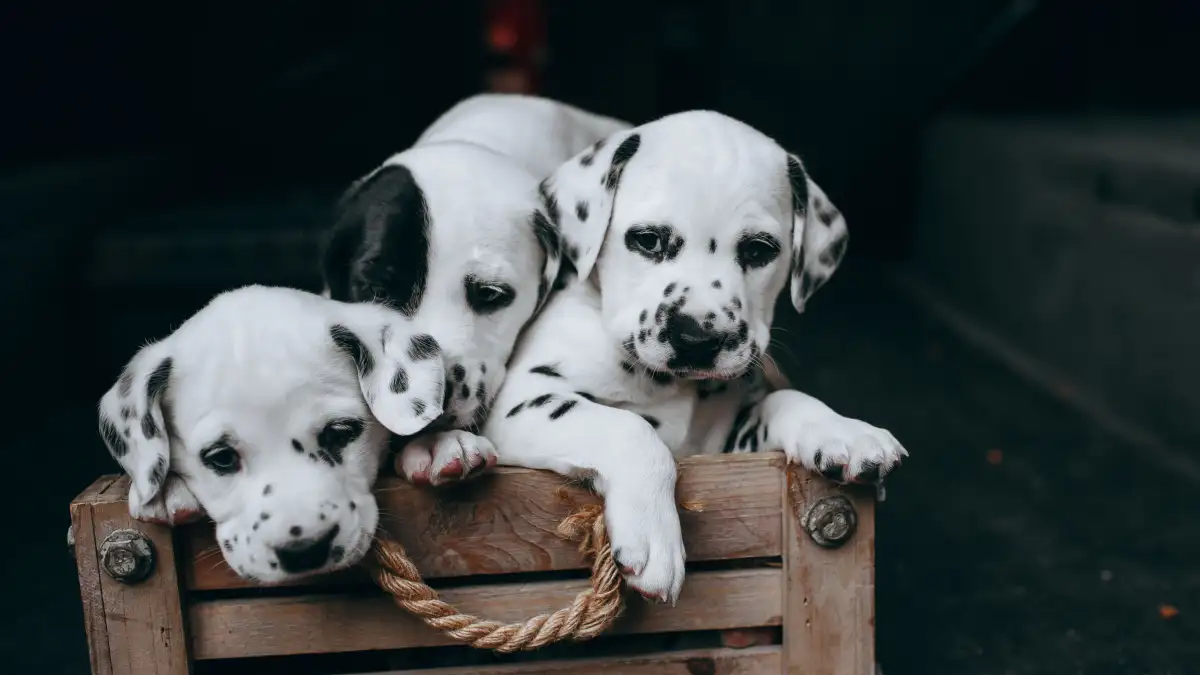
Keeping a puppy home until the vaccine series is finished is a trade, not a safety measure. The bill comes due somewhere around six to eight months, in the form of a dog that plants his feet when a stroller rolls past or refuses to cross a shiny floor. The workable middle is to stop sorting the world into inside and outside, and instead sort every place you might take the puppy by how much unknown dog traffic and standing waste it carries. Match that tier to whatever stage of the vaccine series your veterinarian has your puppy in. Then swap ground contact for carrying, a carrier, a stroller, or a wagon. Under that system almost nothing is off-limits. What's off-limits is the ground in high-traffic places, which is a much smaller thing to give up than three months of a puppy's life.
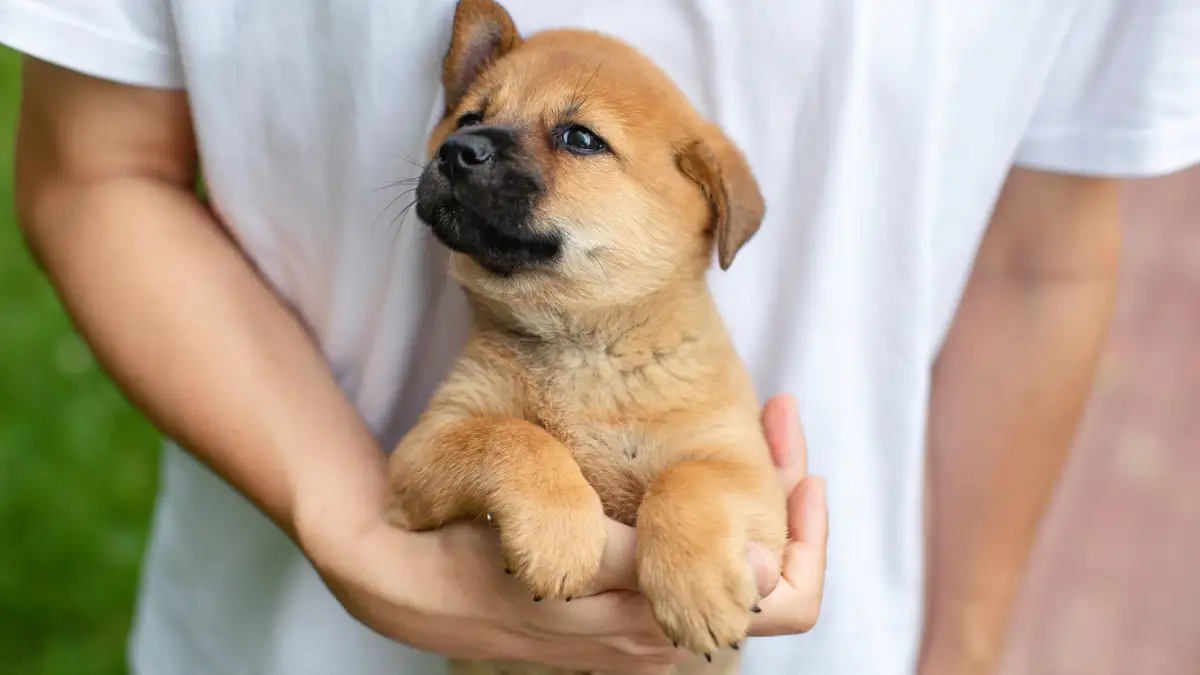
I had a puppy tucked under one arm outside a hardware store last spring when a woman with an old labradoodle stopped to tell me he shouldn't be out yet. She wasn't wrong to say something. She had the unit wrong. What I was avoiding wasn't the hardware store. It was the pavement. He had not touched it. He had been in the crook of my arm since the car, ears forward, watching the automatic door slide open and shut for ten minutes. That was the most useful ten minutes of his week.
The ground is the unit, not the outing
Most people hear "keep the puppy off the ground until the shots are done" and translate it to "keep the puppy home." Those are not the same instruction, and the gap between them is where all the lost weeks go. A puppy who never leaves the house isn't being protected; he's being protected from one thing and quietly exposed to a different set of problems that won't show up until much later.
So I keep two questions separate. Where is his body? And what is under his feet? The first question I answer freely, because he can go almost anywhere. The second one is where I slow down.
Three tiers, sorted by traffic and waste
I don't sort places by how they feel. I sort them by two things I can see: how many unknown dogs walk there, and whether there's standing waste or a lot of marking.
Low. My own fenced yard. My mother's yard, because she has one dog and he's current on everything. My driveway. The front steps of a house where nobody walks a dog. Ground where I know every animal that has been on it. That's the whole bar I'm trying to clear.
Middle. Quiet residential sidewalks, early, before the neighborhood walkers are out. The curb strip in front of my own house. A friend's unfenced yard. A parking lot that isn't attached to a rest stop. Here the puppy can be down, but I keep him moving instead of letting him graze along every vertical surface.
High. The grass around a dog park, even on the outside of the fence. The lawn in front of an apartment dog run. Pet store floors, the aisle with the food bags especially, because that's where every dog in the county has stood. Rest area grass on a road trip. Any patch with waste in sight or a lot of sniffed-and-marked ground. He doesn't touch those with paws until my vet has told me something different.
I'm not making a claim about any individual patch of grass. I'm doing arithmetic I can see. More unknown dog traffic plus more standing waste means more of the thing my vet is trying to keep him away from. That's the entire sort.
A plan built around a schedule you don't control yet
I'm not going to tell you how many visits your puppy needs or when they land. That's your vet's call, and it depends on your puppy, your area, and things I have no window into. What I can tell you is that the plan has to be built so it doesn't need to know in advance.
So the plan runs on phone calls, not on a date. At the end of every visit I ask the same two questions at the counter, where the technician can actually answer them: how many visits are left, and what's okay in the meantime. Then I take that answer and run it through the tiers. Whatever the vet says is the ceiling. The tiers are how I stay under it.
Early on, that usually means the low tier freely and the middle tier with him up. When the answer changes, I move one step down the list, in order, and I don't skip ahead because the weather is nice.
Carrying, if you want it to count
Carrying isn't a holding pattern. It's the exposure. On my own block in thirty minutes: stroller wheels on brick, a shopping cart with a bad wheel, a skateboard, a trash truck's lift arm, a bus kneeling at the curb, an umbrella popping open, a wheelchair ramp, a toddler screaming, a tailgate banging on a pickup. No paws down, and more sensory input than a puppy gets in a month of the same backyard.
The mistake I made the first time was only carrying him. He turned into luggage. A puppy who rides in an arm learns to ride in an arm. So now I look for surfaces that aren't shared ground and set him down on those: the bench outside the hardware store, the tailgate of my truck, a folding chair in the driveway, the low retaining wall on the corner. He needs a surface under his pads while the world moves past. That's the difference between an exposure and a screen.
On gear, briefly, because people overspend here. A sling is great until about twenty pounds and then it's a shoulder injury. A wagon is better for long walks but he rides low and sees less. A stroller gives the best view and invites every conversation on the street. A hard carrier is what I use inside stores. Borrow all four before you buy one; at least one of them won't fit your life.
Borrowed dogs, borrowed yards, and the ten minutes at the door
Dog-to-dog experience doesn't require a public place. It requires one calm adult dog who is healthy and current, in a private yard, on a leash, for fifteen minutes. Then a different one on a different day. Not a group, not a park.
What the adult dog gives you is a correction that comes once and means something. That's not something a person can imitate, no matter how good the treats are. Ask the owner directly: healthy, current, and does this dog spend weekends at the dog park. If the last answer is yes, I move on to the next dog. That's my preference, not a rule handed down from anywhere.
Then there's the ten minutes at the door, and this is what actually buys back the freedom. Shoes off, and they stay off. A towel on a hook that is only for paws, used before he comes in. Hands washed. Waste left where it is, and the puppy steered away from it instead of over it. None of it is medical. It just means I'm not dragging my own street through the kitchen, and it costs ten minutes I was going to spend standing there anyway.
What waiting actually costs
It rarely shows up as fear. It shows up as stubborn. The dog who won't walk past the bike rack at nine months. The dog who goes flat on laminate flooring. The one who is completely fine with people until the person is wearing a hat. Those read as training problems, and they get treated as training problems for a year before anyone says the word socialization out loud.
The other cost is on your side of the leash. Six or eight weeks of staying home turns you into a person who doesn't take the dog anywhere, and that habit is harder to break at a year than the dog's hesitation is.
I'll put the honest caveat here, because the tiers are only as good as the person applying them. A high-rise block in a dense city is a different animal than a cul-de-sac, and a puppy whose vet has flagged something is a different plan entirely. That puppy's plan is whatever the vet says and nothing else. Some veterinarians are more conservative than others, and if yours is, follow yours. This isn't an argument for handing a ten-week-old puppy to a dog park. It's an argument for your own sidewalk, your own driveway, your own arms, and a wagon.
The plan isn't wait or don't wait. It's what next week looks like, and that question only has one good source for an answer.