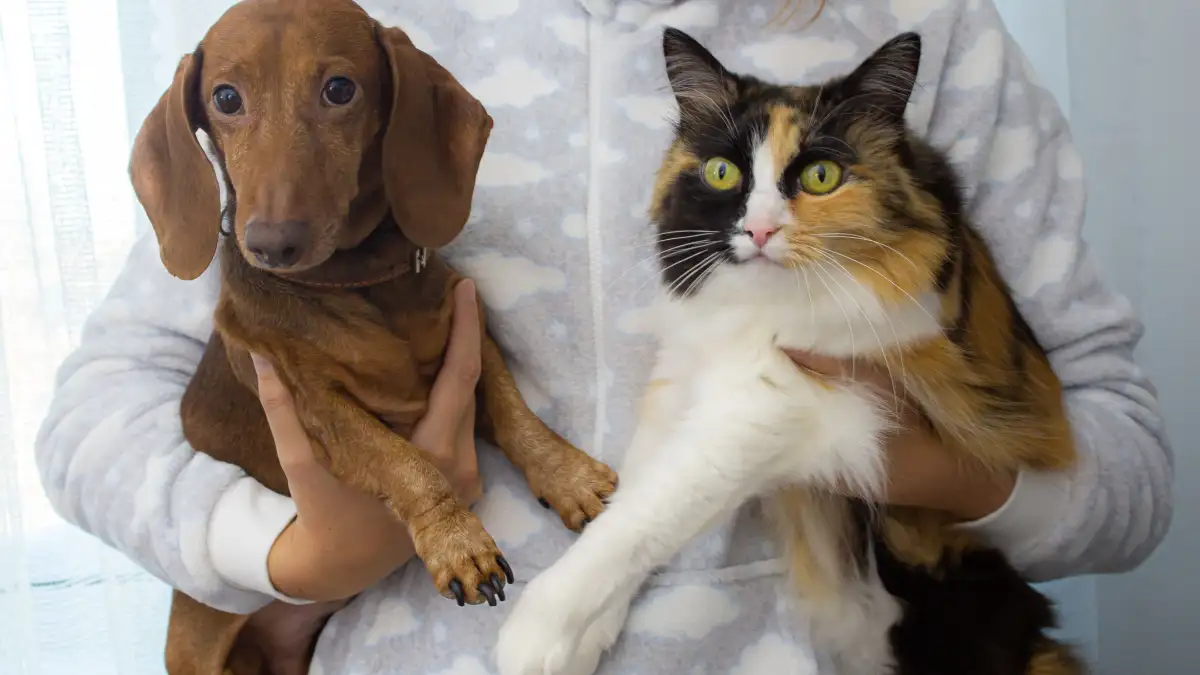
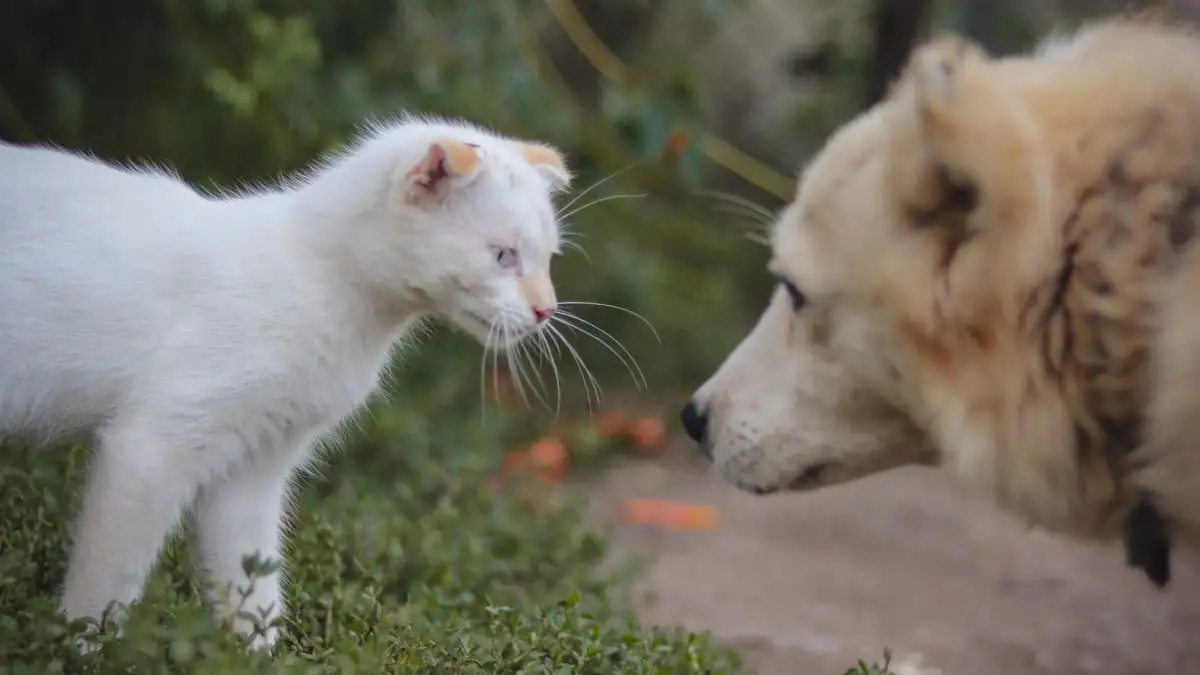
Yes, a chase-prone dog can live with a cat safely, but only if you slow the process down and treat the dog's fixation as the real danger before it becomes a lunge. That means management comes first: physical separation whenever the cat is moving, impulse-control training away from the cat, and barrier-based visual exposure done below the dog's threshold. Free access is the last step, not the first.
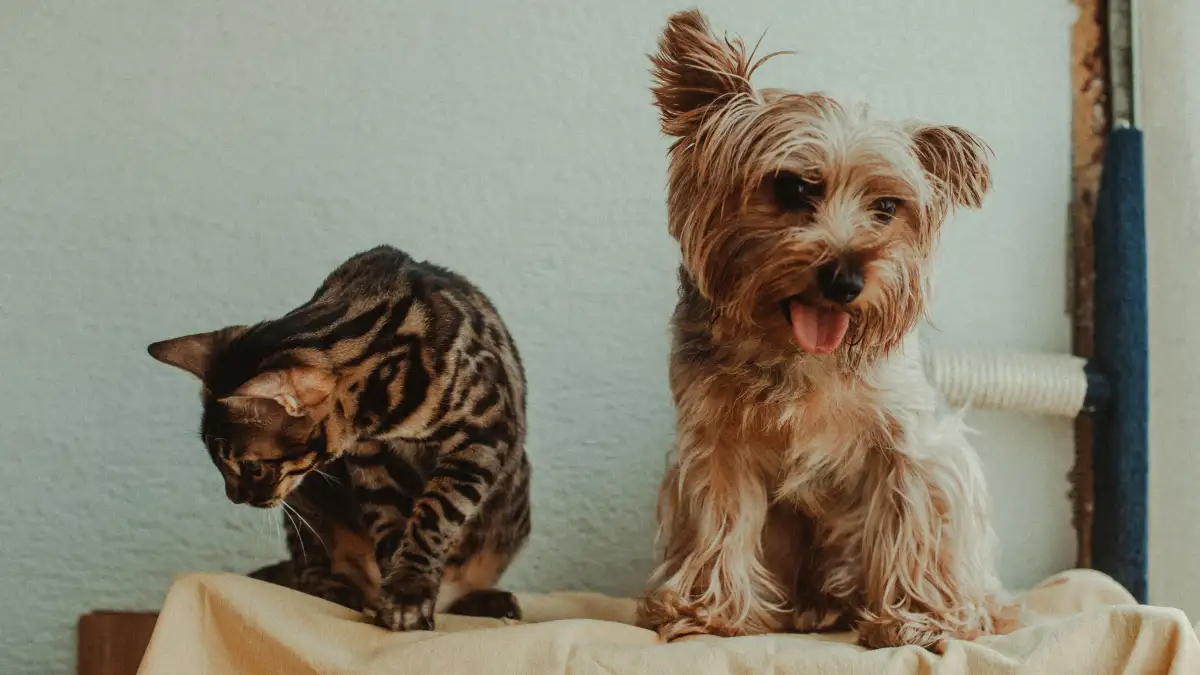
I have worked through this exact situation in a regular house, not a training facility. The dog that stares, stiffens, whines, or has already bolted after a cat needs a different sequence than the puppy who just wants to sniff. What most people get wrong is they try to introduce the animals too early, or they scold the dog for staring, which only adds frustration to an already over-aroused brain. The goal is not to punish the chase. The goal is to build a dog who can see a moving cat and choose to look back at you instead.
Start with management, not introductions
When the cat is moving through the house, the dog should be behind a solid door or in a closed crate. This is not forever. It is the only way to stop the chase pattern from rehearsing while you do the training. A stare through a baby gate can still be rehearsal if the dog is hard-staring and trembling. I use a solid door first, then later a barrier with the cat in control of the distance. The point is that the dog never gets to practice the full sequence of fixate, chase, and lunge.
That means overnight, when you are out, or whenever you cannot actively supervise, the dog and cat are physically separate. Not in the same room with the dog on a loose leash while you check your phone. Separated by a real barrier. I know that sounds like a lot of doors, but it buys you the calm baseline the rest of the plan depends on.
Teach the look-away before the cat is anywhere near
Impulse control around a moving object is a skill you can build away from the cat. I start with a boring item that moves, like a ball rolled slowly across the floor or a toy pulled on a string. The dog is on a leash or behind a gate, and I wait for the moment he glances at me instead of the object. I mark that glance and pay with something he cannot ignore, like real chicken or cheese. Then I name it. I use 'look' or 'eyes,' but the word matters less than the repetition of glance away from movement equals food.
Once the dog can look away from a rolling ball on cue, I make the movement faster, closer, more erratic. I never correct the dog for watching. Watching is information. I reward the choice to disengage. If the dog cannot stop staring at the rolling ball, I make the ball slower or move it farther away. If he still cannot look back, the session ends and I try again later with less movement. This is the exact skill we will need when the cat walks past.
Use a barrier the cat controls
After the dog has a reliable look-away away from the cat, we move to a barrier that the cat can choose to leave. A tall baby gate works for some homes, but only if the cat can easily slip over or under it. The cat must have a clear escape route that does not require running past the dog. I set up the gate in a doorway where the cat can retreat into another room or jump onto a sturdy cat tree in the same room.
The dog is on a leash, not because I plan to jerk the leash, but so I can gently prevent forward movement if he gets stuck. I sit with the dog on a mat, ask for a settle, and reward calm while the cat moves at a distance. The first few sessions may be just the cat appearing for two seconds and walking away. The dog gets paid for staying settled, not for looking at the cat. If he whines or stiffens, I do not tell him no. I just move the dog farther back or close the door. The dog has told me the distance is too hard.
Work below threshold, every single time
Here is the part that separates safe introductions from dangerous ones: if the dog cannot eat, or cannot respond to a simple cue like 'sit' or 'look,' the training is over. That is threshold. You are not teaching anything when the dog is flooded. You are just letting the chase brain run.
I watch for the early signs before the bark or lunge. Hard stare, closed mouth, ears pinned forward, body weight shifting to the front feet, whining that turns high and tight. The moment I see that, I add distance, close the door, or slow the cat's movement. I never wait for the dog to fail. Waiting to see if he can handle it is how dogs and cats get hurt.
This is why the sequence matters: scent first, distant visual second, near visual third. I do not put the dog and cat in the same room to 'see how it goes.' I let the dog smell a towel the cat slept on while the dog is relaxed and eating. Then I open a door just enough for the dog to see the cat at the far end of a hallway. Then I close it again. Then a little closer, with the dog on a mat, still able to take food. Each step can take days. Some dogs need weeks at the distant visual stage. That is not failure. That is the work.
Keep the dog leashed until disengagement is reliable
Even when the dog can see the cat moving at a distance and stay calm, I keep the dog leashed in the same room. The leash is a safety backup, not a training collar. If the dog suddenly hard-stares, I can guide him away from the cat and end the session without anyone rehearsing a chase.
Free access is not a reward for sitting nicely once. It is the result of a long pattern of the dog seeing cat movement and choosing to look away, settle, or walk the other direction on his own. I look for the dog to repeatedly disengage without hearing a cue. That means the cat walks across the room and the dog's eyes track for half a second, then go soft, then he turns to me or lies back down. When that happens over many days, not just in one lucky session, we can talk about free access for short supervised periods.
Separate whenever you cannot supervise, including overnight
I know people want to speed this up because managing two animals feels like a second job. But the fastest way to make this permanent is to keep them separate during all unsupervised periods until the calm behavior is boring. That includes overnight. A dog can be deeply asleep and still wake into chase mode the second a cat runs across the floor in the dark. I set up the dog's crate or a dog-proof room with the door closed, and the cat gets the rest of the house or a safe room. This is not punishment. It is just preventing the exact scenario that would undo months of training.
The calm track record I look for is not one week. I want to see several weeks of the dog ignoring cat movement at close range, with no hard stares, no whining, no stiff body, and no attempt to follow the cat out of the room. Then I slowly allow short periods of loose supervision in the same room while I am actively watching. Even then, I keep the dog's leash trail or a drag line on for the first few supervised free sessions, because a real chase can happen faster than a human can stand up.
If the dog has caught or injured a cat before
This changes the whole plan. If the dog has a history of catching, shaking, or injuring a cat, do not move through this sequence and hope for the best. The dog and cat must remain physically separated at all times, and you need an in-person certified behavior professional who can see your home, your dog's body language, and the real speed of things. A written article, including this one, cannot replace that safety step. I am not going to tell you a few treat tosses will fix a dog who has already rehearsed the full predatory sequence. That would be dishonest and dangerous.
The good news is that many dogs with a chase tendency, even a strong one, can learn to live with a specific cat in a specific home when the management is tight and the training is built below threshold. The dogs I have seen succeed are not the ones who were scolded or corrected for wanting to chase. They are the ones whose people stopped putting them in situations they could not handle, and instead built a new skill one slow session at a time. That is the whole plan, and it works when you stop rushing the first introduction.