The 2 a.m. bark is usually not leftover energy from the evening run. It is a sleep block that got spent in the wrong half of the day. A dog that dozed through a quiet house from nine to four has already had its long sleep, and an eight o'clock run just stacks physical fatigue on top of a body clock pointing at the wrong hours. The fix lives upstream in the schedule: shorten and break up the daytime sleep, move real activity into daylight, then set the meal, the water cutoff, and the last hour before bed so the long sleep lands at night.
2:47 a.m., and the dog is standing at the top of the stairs
I have spent more of these nights than I would like to count. The first thing I notice is that I am awake before the second bark. The first one came out of a light sleep cycle, which is why it feels less like waking up and more like being dropped onto the floor.
The dog is not frantic. That is the detail that matters. A dog that genuinely needs to pee badly is usually already at the door, or pacing, or standing over you. This one is parked at the top of the stairs, nose pointed down the hall, waiting for something to happen. I go down. The floor is cold through my socks.
I open the back door. The dog walks out, crosses the yard, sniffs the same patch of grass it sniffed at ten o'clock, stands there, and comes back inside. Nothing. Twenty-five minutes later, from the bedroom, I hear it again.
That is not a bladder problem. That is a dog with a full tank of awake.
Start with three nights of notes, not with a change
Before I move anything, I write things down. A notebook on the kitchen counter, one page per night, five lines:
- The exact minute of the first bark.
- Whether the dog actually eliminated outside, or just stood there.
- How long until it settled again.
- What happened between 7 p.m. and lights out: food, water, walks, play.
- Whether it barked at a sound, or at nothing I could hear.
Three nights is usually enough. The pattern is rarely random. In my own house it took two pages to see that the trouble was a four o'clock couch nap that ran until six, on a dog that had also been alone in a silent house since nine that morning.
The daytime ledger
Most adult dogs sleep somewhere in the range of twelve to fourteen hours out of every twenty-four, and puppies and older dogs often more than that. Those hours do not have to happen at night. They happen whenever the house is quiet enough, and a house that is empty from nine to four is very quiet.
So the dog is not saving up energy. It is spending its sleep in the daytime and arriving at bedtime with nothing left to sleep off. This is the part that gets skipped when people say a tired dog is a good dog. A physically tired dog is a good dog in the afternoon. A dog that has also been mentally spent during daylight is a good dog at two in the morning.
The distinction is between tired and settled. A hard run makes a dog tired. Sniffing, chewing, problem-solving, and being near you makes a dog settled. They are not the same currency, and the second one is the one that buys you a quiet night.
A sniff walk, where the dog sets the pace and stops whenever it wants for as long as it wants, does more for a night's sleep than a forty-minute fetch session. I have watched that hold true across a lot of dogs. Same with a puzzle feeder, a scatter of kibble in the grass, a frozen stuffed toy, or a ten-minute session of sits and stays in the kitchen. Twenty minutes of that beats an hour of running.
The evening run that backfires
Vigorous play right before bed raises arousal in a lot of dogs and delays settling. Not all of them, and this is where you have to watch your own dog instead of the internet.
Here is how I test it. End the play, start a timer, and count the minutes until the dog is actually lying down with its head flat and its eyes closed. Under fifteen minutes, and evening play is not your problem. Forty-five minutes of pacing, panting, drinking, following you room to room, lying down and standing back up means that dog is still coming down off the adrenaline. Its sleep onset is getting pushed later and later while its wake-up time stays fixed.
If that is your dog, move the hard exercise to morning or early afternoon. Mornings are better anyway, because they set the day up. Do that one thing and wait before you change anything else.
The last break is not the same for every age
The final outdoor trip has to match the dog in front of you. A two-month-old puppy typically cannot hold much past three or four hours, and sometimes less. By four months you might get five or six. A healthy adult dog usually manages six to eight hours overnight. Seniors often shorten again, sometimes in both directions: needing out once mid-night, then sleeping hard in the morning.
If the dog's overnight window is shorter than the schedule you have built, the answer is not a longer hold. It is a later last break, or a quiet mid-night trip that stays boring. Do not tighten the schedule to a number you read somewhere. Tighten it to the number your dog has already shown you.
The evening sequence
This part is more about order than about clock time. Dogs read sequence. If the same four things happen in the same order every night, the last one tells the dog what comes next.
Main meal roughly four to six hours before the overnight stretch begins. A big meal at eight, on a dog that goes to bed at ten, means a stomach still working at two. For dogs that drink heavily after dry food, earlier is better.
Water bowl up about two hours before the last break, for a healthy adult dog eating a normal diet. I keep a small amount available at the last break itself, and I do not cut water short in hot weather, after heavy exercise, or for a dog on medication. Puppies cannot run a long cutoff. They get water right up to the last break.
Last break done properly. Five or ten minutes outside, standing in the yard or a slow walk to the corner, not a door opened and closed in thirty seconds. That trip is the one that buys the next six hours.
Then a low-arousal activity. A chew, a slow sniff around the block on a loose leash, a frozen bowl, or just lying on the floor near you while you read. Nothing with a squeaker. Nothing that involves chasing.
Lights out at the same time, in the same room, in the same order. The order is the cue. The clock is secondary.
Change one thing at a time, over about a week
Here is the mistake I made twice. I decided on a Sunday night that everything was wrong, food and water and the nap and the walk and the play, and I fixed all of it at once. The dog spent the next three nights barking at the top of the stairs, and I had no idea which change caused it.
One change at a time, two or three nights each:
- Nights 1 and 2: notes only. Change nothing.
- Nights 3 and 4: shorten the late afternoon nap. Add a walk or a chew around three or four in the afternoon so the dog is up and doing something.
- Nights 5 and 6: move the main meal earlier.
- Nights 7 and 8: move the water cutoff and push the last break later.
- Nights 9 and 10: move the hard exercise out of the evening.
That is roughly a week and a half, and it is slow on purpose. When you overhaul a routine in one night, the dog has no anchor left. Everything familiar is gone at once, and what you get is protest: whining at the door, scratching, barking at two. When one thing moves and three stay put, the dog can follow the change.
What to do at 2 a.m. while you are fixing the daytime
Keep it boring. No lights if you can navigate without them, no talking, no petting, no ball. Out, stand, back in, same place. If the dog is barking in its sleeping area and does not need to go out, give it a few minutes before you open anything.
The reason is simple and unglamorous. A 2 a.m. bark that produces a walk becomes a 2 a.m. walk. Two nights of that and you have taught a new skill you did not want.
When the schedule is not the answer
Not every 2 a.m. bark is a timing problem.
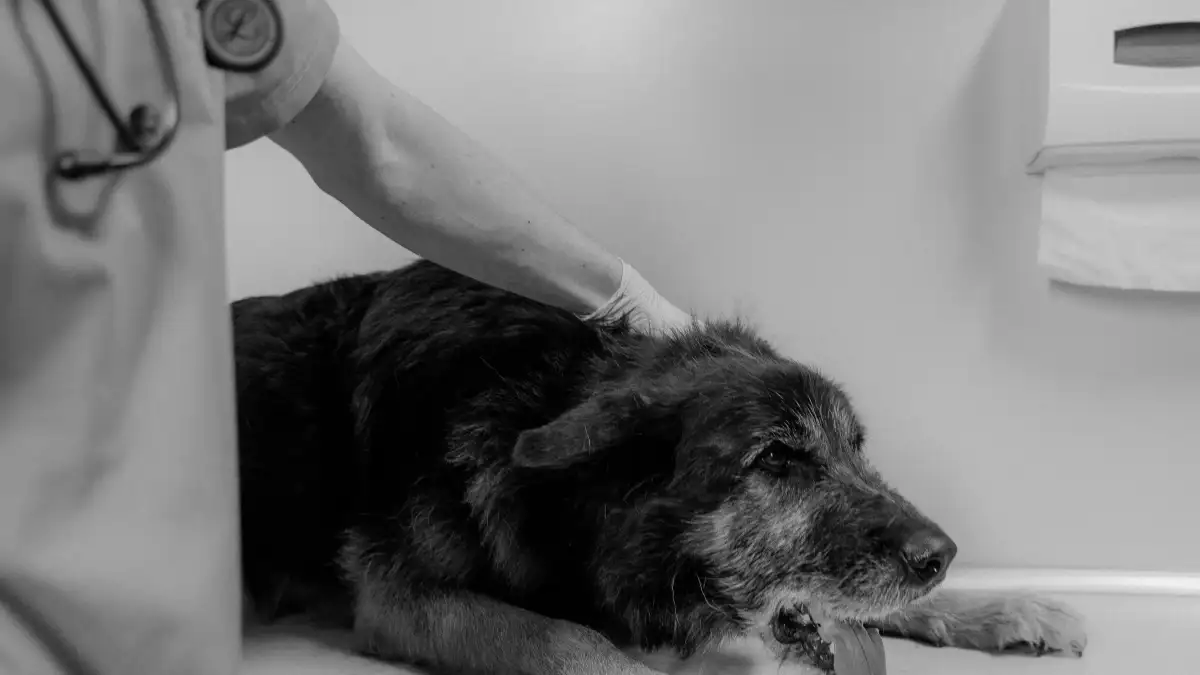
If a dog that has slept through the night for years suddenly stops, that is a veterinary conversation before it is a scheduling one. So is a dog that is drinking noticeably more, having accidents indoors, pacing, staring at walls, or getting stuck in corners, especially an older dog. Pain, urinary issues, and age-related cognitive changes all show up first as broken nights.
And some dogs are barking at something. The neighbor's car on a schedule. A raccoon working the same route. A delivery truck at 2:15. Those dogs will wake at the same minute every night no matter what you do with dinner, and the fix is a different one entirely. Which is another reason to keep the notebook. If the barking follows the world outside rather than your routine, you will see it on the page.