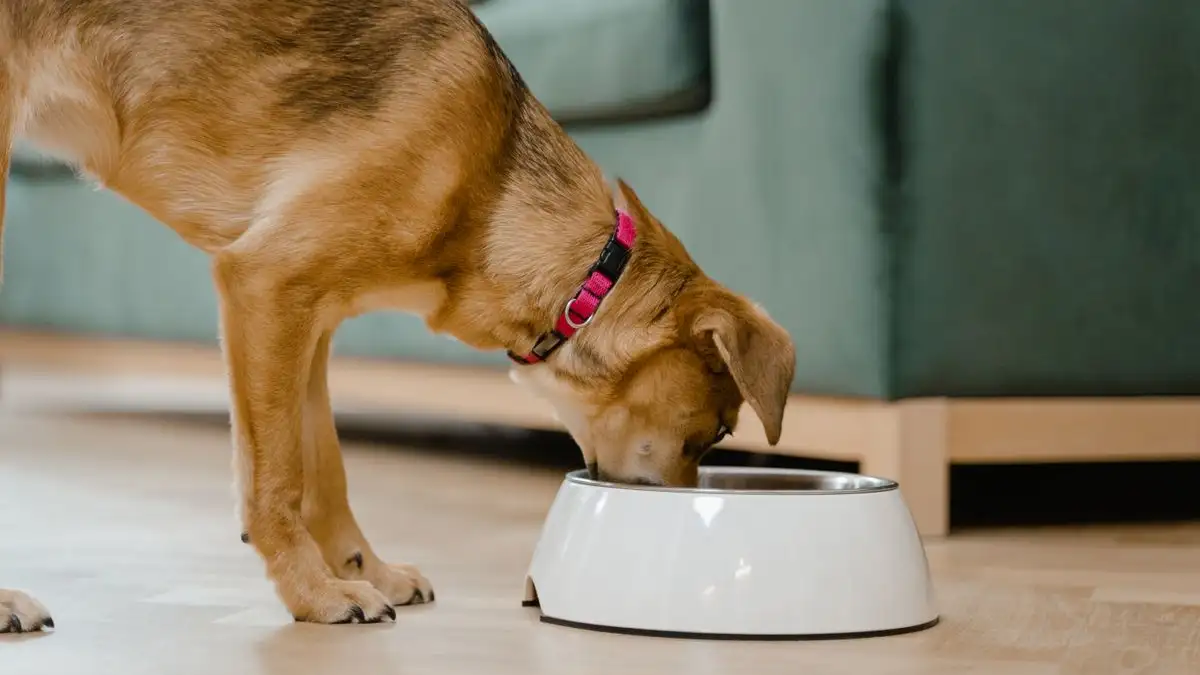
An older dog does not need less food simply because he is older, and the most common route to slow weight gain in the senior years is not a bigger appetite. It is the same scoop going into the same bowl every day while the rest of that dog's life quietly shrinks. Walks get shorter. Stairs get skipped. A long sniff through the yard replaces the loop around the block. The portion never changes, and the weight arrives anyway. There is a real countercurrent, too: some older dogs lose muscle or lose interest in eating and need more calories rather than fewer, which is why the scoop is a starting point and never a set-and-forget answer.
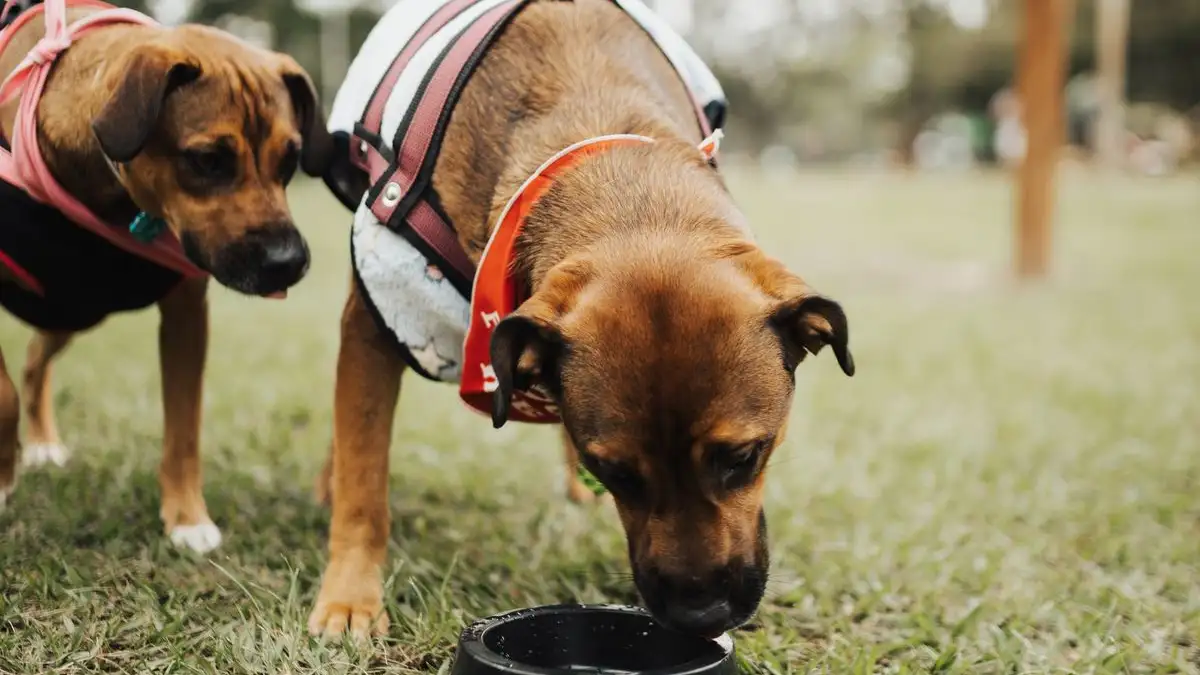
I keep the food bin in the corner of the kitchen by the refrigerator, and the scoop lives buried in it. A plain red plastic one. For years I treated it as a fixed unit of truth: one scoop, twice a day, morning and evening, the bowl in the same spot on the same mat. It never once occurred to me to ask what a scoop weighed, because a scoop is a scoop.
Then my dog turned nine and his day got smaller without anybody announcing it.
The Scoop Does Not Know Anything Changed
Here is the arithmetic almost nobody does. At seven, my dog got two scoops a day and burned them off on two long walks, a flight of stairs to the bedroom every night, and a sprint around the yard at dusk that I could hear from the kitchen window. At ten, he gets the same two scoops and spends most of the day on the cool part of the hallway floor. Same food, same bowl, same owner, different dog.
Calorie needs in older dogs do tend to drift downward, because lean body mass declines and daily activity declines with it. That is a trend, not a rule. I have watched it get treated as a rule in both directions, and both are wrong. There is the owner who cuts a still-solid dog back too far because the dog is old. And there is the owner who never touches the portion because the dog still cleans the bowl and seems completely fine.
Cleaning the bowl is not a signal. Cleaning the bowl only tells you the dog likes food. The signals are on the dog's body, and you have to put your hands on him to read them.
Two Checks, Not One
Once a month I go through the same sequence with my guy while he stands on the kitchen floor. He has learned to hold still for it.
Ribs first. Flat palm on the side of the chest, fingers slightly spread, press in gently. I want to feel the ribs through a thin cushion, roughly the way the back of my own hand feels when I curl my fingers a little. If I have to dig to find them, there is more fat over the ribs than there was.
Then the spine and hips. Both thumbs on either side of the spine, starting behind the shoulder blades and walking them down toward the tail. Then my hands over the hip bones. If that ridge starts to feel like a row of knuckles, or the hip points get sharp under my palm, muscle is going.
Those are two separate readings, and they can move in opposite directions in the same month. An older dog can drop muscle along the spine and gain fat over the ribs at the same time. If I only ever check the ribs, I see a slightly heavy dog and cut the food. If I only ever check the spine, I see a dog losing condition and add food. Both readings are true, and the adjustment has to account for both. That is a conversation worth having with a vet rather than a decision made alone in the kitchen, especially the first time you notice the spine changing.
Which is exactly why the portion needs a number attached to it.
Weigh the Scoop Once
The first thing I did was put the bowl on the kitchen scale, tare it, and scoop in exactly one scoop of food. Then I looked at the number. It was more than I would have guessed, and less consistent than I would have believed depending on how deep in the bin I was digging.
Now the amount lives as a number in grams, not as one scoop. That means when something needs to move, it can move by a small, real amount instead of by a guess.
For the dog's own weight, I hold him on the bathroom scale and subtract my weight. He is big enough for that to be reasonably accurate. For a dog under twenty-five pounds or so, holding him on a bathroom scale is too imprecise to be useful, and a baby scale or the scale at the vet's office is the better tool.
Then I write it on a note stuck to the refrigerator door. Date, grams per meal, his weight that day. It takes thirty seconds, and it is the only reason I can tell you what he weighed back in March.
Every Two to Three Months, or Every Vet Visit
This is the part that actually catches the drift. Every two to three months, or every time we are at the vet anyway, I redo the two checks and pull out the note.
Three months is roughly how long it takes for a small daily surplus to turn into a visible difference. On a fifteen-pound dog, two pounds is a serious change, and two pounds spread across three months is a rounding error per day. That is why the scale and the note matter more than my memory. I cannot feel a quarter ounce per day. I can see six grams on a note from April.
And when the note says the weight has crept up while my hands say the muscle is holding, the answer is a small trim to the portion, not a crash. When the note says the weight is steady and my hands say the spine is getting sharper, subtraction is the wrong move entirely.
When the Bowl Needs More, Not Less
Muscle loss and a fading appetite push the other way, and this is the half of the story that gets skipped. If your dog leaves food sitting, or eats half and walks away, or has gotten bonier along the back and hips, assuming he needs less because he is old is the wrong reflex.
Smaller meals, more often. Two big meals stopped working for my dog around ten. He eats slower now, gets distracted, wanders off mid-bowl, comes back twenty minutes later to food that has lost its appeal. Three smaller meals get eaten. A spoonful of warm water stirred into the kibble gets him started when he is being fussy. Moving the bowl into a quiet corner away from the kitchen traffic gets him to finish. None of that is medical treatment. It is just clearing the small obstacles between an old dog and his dinner.
An appetite change that lasts more than a few days, or shows up alongside anything else, is a vet question rather than a portion question. I do not try to solve that one at home.
The Routine Is the Good Part
Same bowl, same spot, same time of day is genuinely useful for an older dog whose senses and stamina are not what they were. The routine is not the problem. The unexamined number sitting inside the routine is.
So keep the bowl where it is. Keep the schedule. Just weigh the scoop once, put your hands on the dog once a month, and put a date on the note every couple of months. The dog does not get to tell you what changed. The scale and your own hands will.