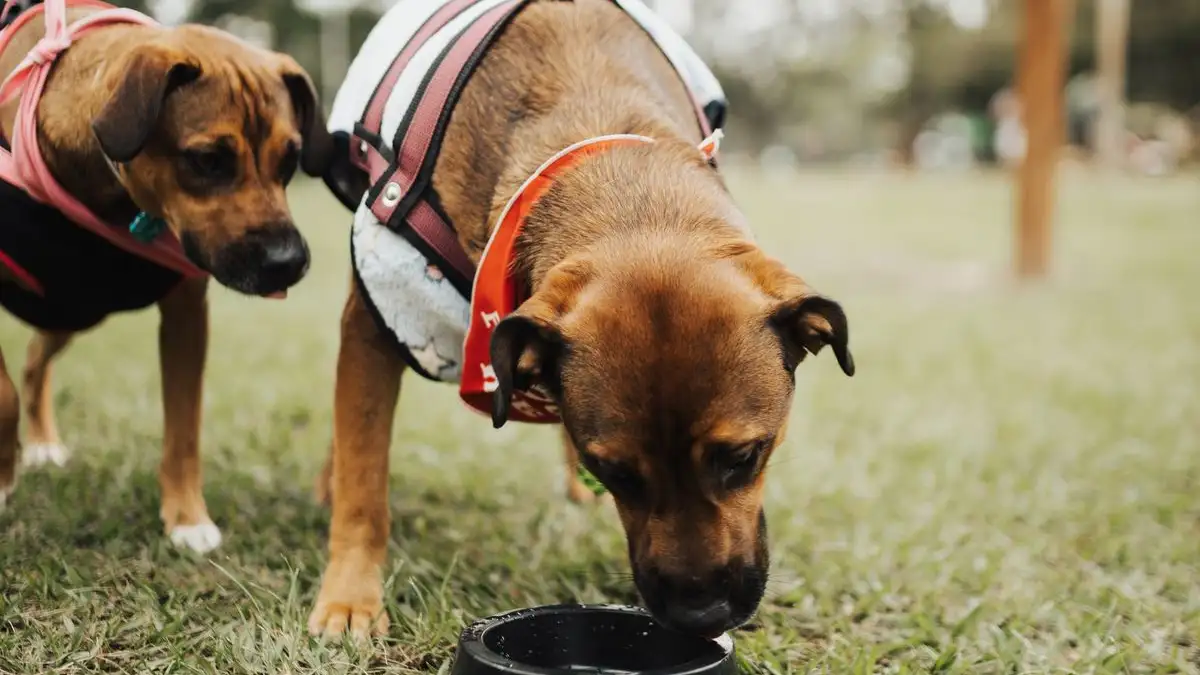
The food didn't change and the scoop didn't change, and that is precisely why the weight arrived. After neutering, a dog's daily energy needs commonly fall by something in the range of twenty to thirty percent, so the same measured portion that used to match him now runs a small surplus every day — a surplus that shows up as a softer waistline about two months later. The correction is boring on purpose: find out what your scoop actually delivers in calories, cut about ten percent at a time, hold each cut for two to three weeks, and check ribs and waist with your hands every month rather than trusting the number on the scale alone.
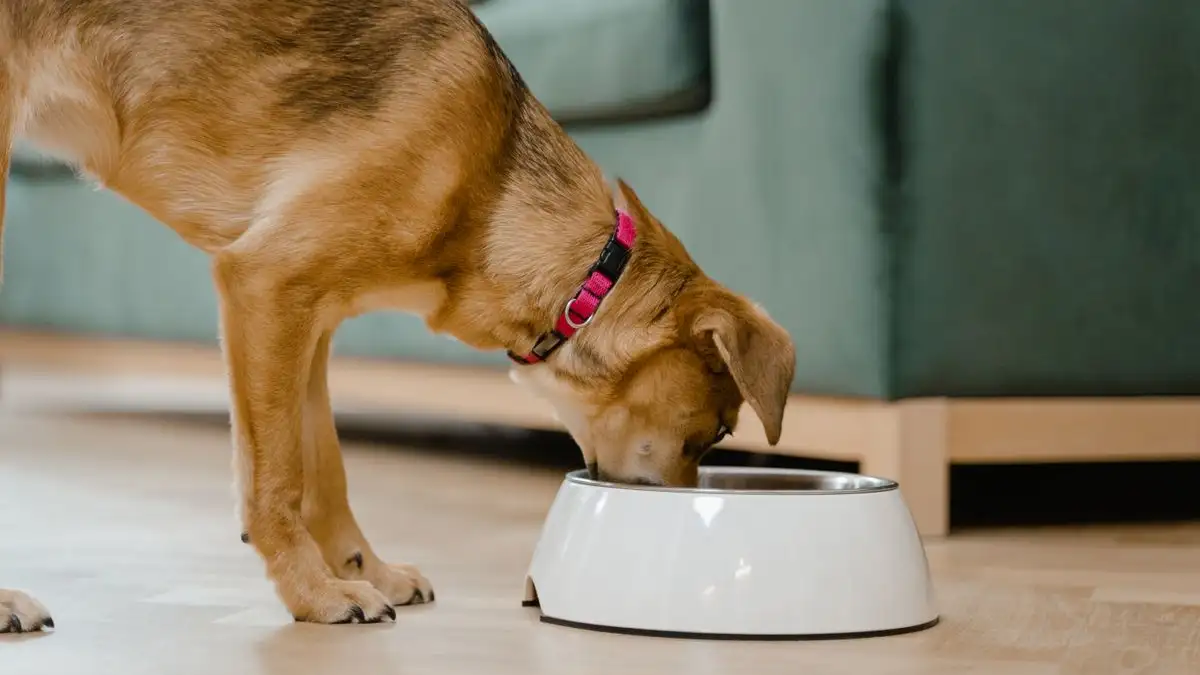
The Scoop Was Never Really a Measurement
I keep my one-cup measure in the drawer under the microwave, next to the takeout menus and a roll of tape. Dip, shake once, level it with the side of my hand, dump it in the bowl. Two meals a day, same motion, for two years. I never once thought about it.
What I never did was weigh it.
Here's where the arithmetic slides quietly out of alignment. The chart on the bag is written in cups. The scoop claims to be a cup. So it feels like measuring, and it isn't. A cup of kibble is not a fixed weight. It depends on kibble size, on whether you're scooping from the top of a fresh bag or the compacted bottom of the bin, on whether that one shake loosened things or settled them. The number that actually matters is printed in small type on the label: kilocalories per cup, or kcal ME per kilogram. Find that line with the bag under a bright kitchen light — it usually sits near the guaranteed analysis, and it's the only line on the bag written for math.
Once is enough. Put the scoop on a kitchen scale, zero it, scoop the way you actually scoop, and look at the grams. Do it twice, on two different days. Now you know what your "two cups" has been in real terms, and you have a starting number.
Roughly a Quarter of the Bowl, Handed Back Every Day
If a dog's energy needs drop by twenty to thirty percent after neutering, then a dog eating two cups a day is now roughly half a cup over. Half a cup doesn't sound like much until you say it the other way: he is eating about twenty-five percent more than he needs, every single day, out of the same bowl, from the same bag. That's the whole mystery. Nothing in the kitchen changed. The target moved.
I can tell you what it looks like in the house before it looks like anything on a scale. The waist softens first, so when he stands in the doorway with the light behind him, the line from rib to hip goes straight instead of tucking in. Then the collar gets let out a notch, and you tell yourself the collar shrank. Then he sits down halfway up the stairs and looks back at you like the stairs are being unreasonable.
None of that shows up the week of the appointment. It shows up over a couple of months, which is exactly why people become so certain the food is the problem.
Cut the Extras Before You Cut the Meal
Before touching the bowl, count everything that isn't in it. The biscuit after the walk. Half a string cheese while you're making lunch. The peanut butter smeared inside the toy. The two bites of chicken at dinner because he's sitting there being polite about it. Those calories are invisible because they never pass through the measuring cup, and they are frequently the entire ten percent you're trying to remove.
I learned that the hard way. I cut his bowl, he acted like the world had ended, and I made it up to him with a chew I did not count. Three weeks later nothing had moved and I was ready to blame the food. The food was innocent. I was the variable.
So on a normal Tuesday, write it down. Bowl, treats, chews, the bites. Then convert the treats into bowl-equivalent, because half a biscuit is not free — it's a subtraction from dinner. Trim from the extras first. Plenty of dogs get their whole adjustment from that alone, and nobody at the bowl has to suffer for it.
Ten Percent Steps, Held for Two to Three Weeks
When the extras are gone and the weight still isn't moving, take it from the meal in small steps.
A ten percent cut on two cups a day is about three tablespoons total, split between the two meals. It looks like nothing in the bowl, and that's the point. A hard cut makes a dog who is genuinely hungry, and a genuinely hungry dog makes an owner who caves at nine at night — which puts the calories straight back and teaches you that "cutting never works."
Give each step two to three weeks before you judge it. Bodies don't answer on a three-day timescale, and the first week is mostly water and attitude.
Weigh monthly, same scale, same conditions — morning, before breakfast. A vet's scale, a baby scale, or a bathroom scale with you holding him and then subtracting your own weight. Pick one method and stay with it, because switching methods mid-stream is how you convince yourself nothing is happening.
If nothing has changed after three weeks, take another ten percent. If he is losing, stop cutting and hold where you are. Slow is fine. A medium dog dropping a fraction of a pound a week is doing well, and you're not trying to win a race. Your vet can tell you what pace they want for your particular dog, and that's a better guide than any number I could hand you.
Use Your Hands, Because the Scale Lies Twice
Muscle is denser than fat, so a dog can lose fat, hold the same weight, and look completely different. The scale will tell you nothing happened. Your hands will tell you the truth.
Run both palms flat along his ribcage. You should feel the ribs under a thin layer, the way the back of your hand feels — bones present, but cushioned. If you have to press to find them, there's a layer to lose. If they feel like your knuckles, you've gone too far and it's time to add food back. Stand over him and look down: there should be a visible tuck behind the ribs, an hourglass rather than a barrel. From the side, the belly should tuck up toward the hind legs. And keep half an eye on the spine and hip bones. If those go sharp and pointy, that's your stop sign, and you should talk to your vet before cutting anything else.
Keep the Volume and the Protein Up
Here's the part that gets skipped when people simply halve the scoop. Cutting the portion cuts everything inside it, including the protein that holds muscle on. The goal is not a smaller dog. It's a leaner one.
Two practical ways to get there. First, look for a food with fewer calories per cup, so the same volume of kibble delivers less energy while the protein stays roughly where it was. Second, add bulk that costs almost nothing in calories — a handful of plain green beans, some cooked carrots, a splash of warm water over the kibble to slow him down and make the bowl look like more than it is. A slightly fuller bowl does more for household peace than any speech about portion control.
If your dog has any health condition at all, run the change past your vet before you start. There are real reasons a specific dog shouldn't be on a specific plan, and I would much rather you ask than guess.
The Adjustment You'll Make Twice a Year
Calorie needs track activity, and activity is not a constant. A working or sport dog and a couch companion of the same weight can need quite different amounts, and so can the same dog in July and in January. My own dog gets twenty-minute walks when the heat is brutal and ninety-minute walks when it breaks, and I've stopped pretending those are the same week. I check his ribs when the weather turns, in both directions — once when the heat settles in, once when it lets go — and I weigh him at the same time. Two small adjustments a year beats one big correction every spring.
The first week of any cut is the worst. He will follow you, sigh at the bowl, and generally behave like a dog who has been wronged. Then it becomes the new normal, and one ordinary morning you run your hands down his sides and feel the ribs without pressing, and the bag on the shelf is the same bag it always was. Nothing about the food had to change. The amount did. That's the whole thing.