Twice a day is the right default for most adult dogs, and the dogs that genuinely do better on a single meal tend to be small, calm, and living inside a routine that holds one feeding steady. Body size, workload, and the shape of your actual day decide the rest — not the feeding chart printed on the bag.
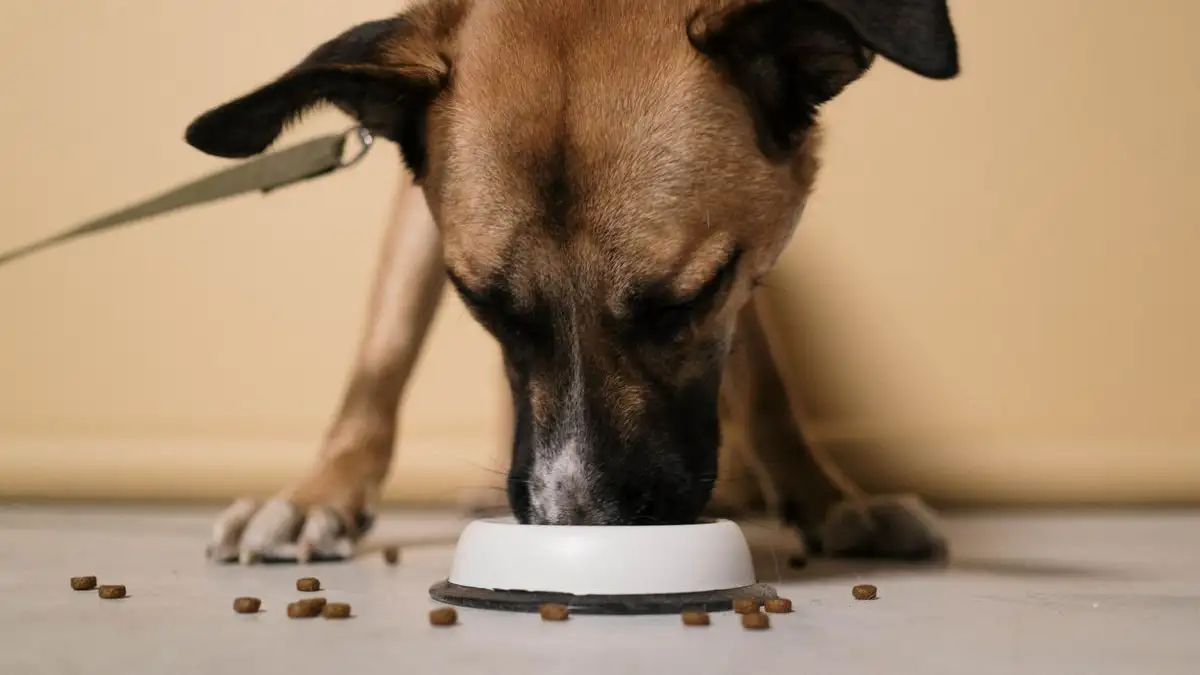
I want you standing where I stand, which is barefoot on a cold kitchen floor at 5:40 in the morning with a stainless bowl in one hand, listening to kibble hit metal. My dog is parked behind my left knee. She has been there since the coffee started. That's the detail worth keeping, because the number of meals a day is really a question about how long a dog has to wait, and in that kitchen you can feel the wait from the inside.
Why most adult dogs end up on two meals
Picture the clock on the wall. If a dog eats once, at, say, 7 a.m., the next meal lands 24 hours later. She sleeps through part of that, but the waking part of the gap is long. Two meals cut the longest stretch roughly in half, and that single change does more for most dogs than anything else you could adjust.
There's a mechanical reason too. Two meals means each one is smaller. A smaller meal gets swallowed with less of a rush, sits more comfortably, and doesn't leave a dog lying around on a heavy stomach.
And there's a behavioral reason nobody prints on the bag. A dog fed twice has two anchors in her day. She knows when the day bends. The counter-surfing starts around 4 p.m. in a lot of houses not because the dog is poorly trained, but because the last thing that happened was breakfast and nothing is going to happen again until dinner.
Size is the first fork in the road
If your dog is a large or giant breed with a deep chest — the Great Dane, the Doberman, the big shepherds, the Standard Poodle, the Irish Setter — the question is basically settled. Vets commonly recommend splitting the daily food into two or more smaller meals for these dogs, because of the risk of bloat, which is the twisting, life-threatening kind of stomach distension, not just a gassy afternoon. One enormous meal is exactly the shape of the thing you are trying to avoid. Ask your vet about your specific dog; the guidance is almost always more meals with less in each, and it costs you nothing but a second bowl.
At the other end, a nine-pound dog who sleeps most of the day and has a steady temperament can often do perfectly well on one meal. Some small dogs actually eat better on two small portions than on one that takes forever to finish. There's no law here. The smaller the dog, the more freedom you have.
The working dog doesn't get the same answer
A herding dog on twenty acres and a lap dog in a two-bedroom apartment are not solving the same problem. Higher activity means higher calorie needs, and more food usually means more volume per meal, which is the wrong direction for a deep-chested dog. Athletic and working dogs often do better with the food spread across more sittings rather than piled into one.
Timing matters as much as count. I feed after work, not before. A big meal followed by hard running is a bad combination — uncomfortable at best, and it stacks into the same risk cluster as bloat. If your dog does agility, flyball, long hikes, or all-day retrieving, feed her when the work is done, then let her settle.
Begging is usually a scheduling complaint
When someone tells me their dog begs, guards the kitchen, or counter-surfs, I ask about the clock before I ask about training. Most of the time there's a twelve- to fourteen-hour gap sitting in that day, usually overnight, and the dog is filling it the only way she can.
Sometimes the fix isn't a third meal. It's moving the evening meal later, or giving a small portion at bedtime so the overnight stretch isn't a marathon. If your dog wakes you at 5 a.m. and paces the hallway, the problem may be how the day is divided, not how much is in the bowl.
Check the dog, not the scoop
This is the part people skip. Meal frequency does not control weight — total intake does. If you drop from two meals to one and the dog starts to thicken through the ribcage, that's a portion problem wearing a frequency costume.
So put your hands on her. Run your palms along both sides of the ribcage. You should feel the ribs under a thin layer, without pressing hard, and without each one standing out sharply. Stand over her and look for a waist behind the ribs. Look from the side for a belly that tucks up toward the hind legs. Do it monthly, in the same spot, and don't bother writing it down — you'll remember.
If you're changing how many times she eats, those three checks are how you know whether the change was neutral, good, or a slow mistake.
Move between one and two slowly
Digestion doesn't love surprises. Going from one meal to two, or from two to one, is a week-long job, not a morning decision. Don't delete a meal and hope. Shift the amounts. First day, take a quarter of the single meal and move it to the new time. Next day, a third. Keep going until the split looks right and the dog is eating at the same pace she always did.
Watch the stool. Loose stool, an unsettled stomach, or a dog who seems uncomfortable after eating are all signals to slow down and go back a step. If your dog vomits yellow foam in the morning before she's eaten anything, that's worth a call to your vet rather than a guess — sometimes it's a long empty stretch, sometimes it's something else, and only your vet can tell which.
And if your dog has a diagnosed condition, takes medication, or is gaining or losing weight for no obvious reason, the feeding plan is a conversation with your vet, not a decision you make off a chart. Same goes for portion sizes and calorie numbers. Those depend on the individual dog, and nobody on the internet can hand you the right one.
What I'd do tomorrow morning
Pick two times you can actually keep, seven days a week. Look at the longest gap between them and count the hours honestly. If it runs past about twelve, consider moving a meal or splitting the food again. Then run your hands over your dog's ribs once a month and let that — not the number of bowls in the cupboard — tell you whether the plan is working.
The once-versus-twice-a-day debate gets argued like there's a right answer hidden somewhere in it. There isn't one. There's your dog's size, her workload, your schedule, and the clock on the wall. And there's the fact that she's been sitting behind your left knee since the coffee started, waiting to find out.
